A production floor that cannot be closed for three days has a very different brief from a domestic garage that can sit empty over a weekend. That is where an MMA floor coating review becomes useful. Methyl methacrylate, usually shortened to MMA, is one of the fastest-curing resin flooring systems available, but its speed is only one part of the decision.
For busy commercial premises across Belfast and Northern Ireland, MMA can provide a hard-wearing, hygienic and visually sharp surface with a return to service measured in hours rather than days. It is particularly attractive where downtime costs money: food preparation areas, retail units, workshops, healthcare settings, corridors and industrial spaces. Yet it is not automatically the right answer for every floor. The preparation, odour during application and budget all need proper consideration.
MMA floor coating review: the short verdict
MMA flooring is a high-performance option when rapid installation, low-temperature curing and dependable day-to-day durability matter most. Applied by an experienced resin flooring contractor, it creates a continuous surface that is easy to clean and can be specified with anti-slip texture, coloured zones, safety lines or decorative flakes.
Its major advantage is speed. While many conventional resin systems need a longer cure before they can tolerate foot traffic, equipment or vehicles, MMA systems can often be ready within a few hours. This makes them a strong fit for sites that cannot afford prolonged closure.
The trade-off is that MMA installation is more specialised than a straightforward paint-on coating. The material has a distinctive, strong odour while it is being laid, and it cures so quickly that the installation team needs a well-planned process, the right equipment and excellent control of the working environment. It can also cost more than a basic epoxy solution. For the right project, however, the operational savings can outweigh the initial outlay.
What makes MMA resin flooring different?
MMA is a reactive resin system rather than a conventional floor paint. Once its components are mixed, the chemical reaction starts quickly. Skilled installers can adjust the curing rate to suit the temperature and programme, allowing work to continue in conditions that would slow down other systems.
This is particularly relevant in Northern Ireland, where colder weather and unheated commercial spaces can complicate flooring projects. MMA can cure at lower temperatures than many alternatives, helping projects stay on schedule when a fast turnaround is required.
A typical system is built in layers. The existing substrate is prepared, imperfections are repaired and a primer is applied where required. The resin body coat follows, with aggregates broadcast into the surface if a more durable or slip-resistant finish is needed. A seal coat locks the system together and delivers the chosen appearance. The finished floor is smooth enough for cleaning but can be designed with the right grip for wet entrances, kitchens, ramps or production areas.
Where MMA flooring performs best
MMA is often selected for environments where hygiene, footfall and fast reopening sit at the top of the brief. In retail, it can refresh a tired back-of-house area or customer-facing floor without a long interruption to trading. In hospitality and food settings, the joint-free finish makes routine cleaning easier than with cracked concrete, damaged vinyl or tile grout.
Industrial facilities benefit from a resin surface that resists wear from regular traffic, wheeled equipment and everyday spills. A correctly specified MMA system can also help create clear work zones through colour coding, pedestrian walkways, loading bays and marked safety areas. This is not simply decorative. Clear floor markings support a more organised, professional working environment.
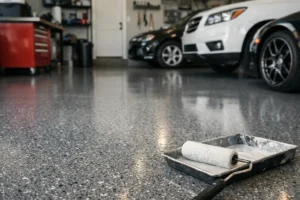
For garages, showrooms and workshops, MMA offers a clean, high-impact finish that can lift the appearance of the entire space. A light-reflective colour can make an enclosed room feel brighter, while flake blends can disguise minor dust and tyre marks better than a plain single-colour floor.
It is less commonly the first choice for a small domestic room where speed is not a priority and occupants are sensitive to installation odours. In that case, epoxy or polyaspartic may offer a more proportionate solution, depending on the substrate and desired finish.
The benefits that matter on site
The headline benefit is rapid cure time, but MMA earns its place through a combination of practical strengths. Once installed, it forms a non-porous, easy-to-clean surface with no grout lines to trap dirt. This supports cleaner facilities and reduces the visual impact of a worn, dusty concrete slab.
MMA systems can be built to suit the space rather than forcing every site into one finish. Fine textures can improve slip resistance without making cleaning unnecessarily difficult. Bold colours, contrasting borders and directional markings can support branding or safety requirements. Decorative flake finishes give customer-facing floors a more polished result while retaining the toughness expected in a working environment.
The system also adheres well when the base is properly prepared. That final condition matters. Resin flooring is only as reliable as the concrete, screed or existing surface beneath it. A specialist survey should identify moisture, weak areas, contamination, cracks and levels before anyone promises a finish.
The limitations to consider before choosing MMA
The smell during installation is MMA’s most widely discussed drawback. The resin has a strong, recognisable odour while it is curing, so ventilation, work scheduling and segregation from occupied areas need to be planned carefully. The odour dissipates after curing, but this is not a material to apply casually in a live building without a clear method statement.
Cost is another factor. MMA is a premium resin system, particularly when it includes detailed substrate repairs, anti-slip aggregate, multiple colours or line marking. A lower upfront price from a basic coating may look appealing, but it is not a like-for-like comparison if it leaves a site closed longer or fails under the intended use.
The fast cure also leaves little room for error. Poor mixing, rushed preparation or inconsistent application can affect the finish. That is why material choice and installer capability should be considered together. The best resin product cannot compensate for a damp, contaminated or poorly prepared base.
Moisture and substrate condition
Concrete can look dry while still holding moisture that interferes with adhesion. Floors exposed to rising damp, oil contamination, previous coatings or movement cracks need proper assessment. Mechanical preparation is generally required to remove weak laitance and create a sound key for the resin.
Where the substrate needs repair, those repairs should form part of the specification rather than an afterthought. A professional installer will explain what is included, how edge details and joints will be treated, and whether any areas need levelling before the coating begins.
Appearance and long-term care
MMA floors are designed for hard use, not neglect. Regular sweeping and appropriate cleaning preserve the surface and prevent abrasive grit from dulling the finish. Spills should be cleaned promptly, particularly in areas handling oils, chemicals or food products.
Colour selection deserves thought too. Brilliant white looks striking in a showroom but shows tyre marks and dirt more readily than a mid-grey or flake blend. A good specification balances visual impact with the realities of the space. The most impressive floor is one that still looks professional after a busy month of use.
MMA, epoxy or polyaspartic?
There is no single best resin floor for every property. Epoxy remains an excellent choice for many commercial and industrial projects, particularly where the programme allows more curing time and a substantial build-up is required. It is widely used, versatile and can offer very good value.
Polyaspartic systems are also valued for fast curing and UV stability, making them popular for garages, showrooms and areas exposed to daylight. MMA stands apart when ultra-fast return to service and reliable cold-weather curing are central to the project.
The right comparison is not just product against product. It is the required downtime, expected traffic, cleaning regime, slip-resistance needs, condition of the base and finish you want at handover. A coating that costs less but disrupts operations for longer may not be the economical option.
Choosing the right MMA finish
Before selecting colours or textures, define how the floor will be used. A healthcare corridor needs a different surface profile from a vehicle workshop. A commercial kitchen may need greater slip resistance and close attention to cleaning methods, while a retail space may place more weight on appearance and branding.
Surface King can assess the existing floor, recommend a suitable resin system and create a finish that works as hard as it looks. From practical industrial coatings to decorative, easy-clean commercial floors, the specification should be based on the demands of the site rather than a one-size-fits-all product.
A good MMA floor is not just a fast fix for tired concrete. It is a planned upgrade that can reduce downtime, improve cleanliness and give a working space the polished, durable finish it deserves.