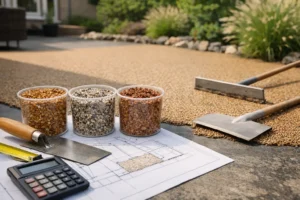
A resin aggregate calculator gives you a sensible starting point before a single bag of stone or resin is ordered. For a driveway, patio or path, getting the quantity right affects more than the final price. It determines whether the installation can be laid consistently at the specified depth, whether the blend looks even from edge to edge, and whether the project stops halfway through while extra materials are sourced.
For resin bound surfaces in particular, accuracy matters. The resin and decorative aggregate are mixed to a controlled ratio, then laid as one permeable, hand-trowelled surface. Ordering too little can leave an installer short of material and unable to achieve a clean finish. Ordering far too much creates unnecessary cost and leaves you with loose aggregate that may not match a future batch exactly.
What a resin aggregate calculator should tell you
At its most useful, a resin aggregate calculator estimates the quantity of aggregate and resin required from three core details: the area in square metres, the intended laying depth, and the system being installed. It should help you turn a rough sketch or site measurement into an order that is close to the real requirement.
A calculator is not a substitute for checking the site. Driveways are rarely perfect rectangles, paths often widen around gates or corners, and existing levels can affect the practical finished depth. Still, it is an excellent first step for budgeting, comparing design options and preparing for a professional consultation.
For homeowners, the main question is usually: how many square metres am I covering? For commercial projects, there may also be access routes, falls to drainage points, expansion joints, loading requirements and phased working areas to consider. The calculation starts in the same place, but a larger or more demanding site needs closer assessment.
Measure the area before calculating materials
Measure the length and width of each straightforward section in metres, then multiply them to find the area. A 10-metre driveway that is 4 metres wide covers 40 square metres. If the shape is irregular, split it into simple sections, calculate each section separately and add the figures together.
Curves and circular features need a little more care. It is better to slightly over-measure a curved edge than to base an order on a guess. Borders should also be measured separately when they use a contrasting aggregate blend or a different width from the main field.
Do not forget the parts that can easily be missed: an entrance apron, a side return beside the house, a bin area, steps or a connecting path. These details often make the finished surface look complete, but they can add meaningful square metreage to the material requirement.
Allow for the right laying depth
The required depth depends on the aggregate size, the intended use and the specification of the resin bound system. A pedestrian pathway may use a different depth from a domestic driveway, while areas exposed to vehicle traffic need a build-up designed for that loading.
The finished resin bound layer is not there to compensate for a poor base. A suitable, stable and correctly prepared substrate is essential. Where a driveway base is cracked, uneven, soft or holding water, remedial work or a new tarmac base may be required before the decorative surface is installed. Increasing the resin bound depth without addressing the base is not a reliable fix.
A good calculator therefore needs a depth setting that matches the chosen system, rather than applying one figure to every project. If you are unsure, ask for advice before ordering. The best specification is the one that suits how the area will actually be used.
Resin bound and resin bonded use different quantities
This is where online estimates can become misleading. Resin bound and resin bonded surfacing may both use decorative aggregate, but they are very different systems.
In a resin bound surface, kiln-dried aggregate is thoroughly mixed with resin before it is laid. Every stone is coated, producing a smooth, decorative finish with a strong, even appearance. When installed over an appropriate permeable base, the system can allow water to drain through the surface rather than sitting in puddles.
Resin bonded surfacing is created by applying resin to the base and scattering aggregate over it. The excess stone is removed once the resin has cured. Because aggregate is broadcast rather than mixed through the resin, the material calculation and expected coverage are different. A resin aggregate calculator must be set up for the system you are planning, otherwise the result will not be dependable.
This distinction also affects the look and feel underfoot. Resin bound is generally chosen for its smooth, contemporary finish and permeability. Resin bonded provides a more textured, loose-stone appearance with the aggregate exposed at the surface. Both can transform tired concrete, tarmac and external spaces when specified and prepared correctly.
Why the aggregate blend changes the calculation
Not all decorative stone is the same. Aggregate size, shape, moisture level and bulk density can influence the quantity required for a given area and depth. A premium resin bound blend is normally supplied as a specified mix, often combining different stone sizes to improve visual depth and packing within the layer.
That is why it is risky to calculate only by the number of bags without confirming the bag weight and blend specification. Two products may look similar in photographs but have different coverage rates. Use the figures supplied for the selected material system, particularly where you are combining a main blend with borders, patterns or lettering.
Colour choice can have a practical effect as well as a visual one. Light blends can brighten a shaded courtyard, while deeper tones may be a strong fit for modern driveways and commercial entrances. Bespoke design should be planned at the calculation stage, not added as an afterthought, because each separate blend requires its own allowance.
Build in a realistic allowance for waste
A calculated quantity should be treated as a working estimate, not an invitation to order to the exact kilogram. Small allowances are sensible for cutting in around drains, manholes, edging, curved lines and changes in level. They also protect the project against minor measurement errors.
The right allowance depends on the shape of the space. A square, open patio with clean edges creates far less waste than a narrow winding path with multiple access covers and detailed borders. For larger sites, the practical issue may be batching and delivery rather than simple waste. Material must be available in the right sequence so installers can maintain a consistent finish across the area.
Avoid excessive over-ordering, however. Decorative aggregates are natural materials, and later batches can vary subtly in tone. If spare material is kept for repairs, store it dry and clearly labelled, but do not assume loose stone alone will make a future resin bound repair invisible. Professional repair work must consider the existing surface, resin system and colour weathering.
The figures a calculator cannot see
A calculator cannot inspect drainage, identify movement in an old concrete slab or tell you whether a tarmac surface has enough integrity for an overlay. It cannot assess vehicle turning points, where tyres place greater stress on a driveway, or whether an industrial floor needs chemical resistance, anti-slip properties or a rapid-curing MMA, epoxy or polyaspartic system.
It also cannot account for access. A rear garden reached through a narrow passage may require a different installation plan from an open front drive. On commercial premises, the time available for preparation and curing can shape the entire specification. The right material quantity is only one part of a successful surface.
For this reason, the strongest approach is to use your estimate to start the conversation, then have the measurements, base condition and design checked by a specialist. Surface King can advise on the right resin system, aggregate blend, preparation work and finished detail for projects across Belfast and Northern Ireland.
Turn an estimate into a surface that performs
Use a resin aggregate calculator early, particularly if you are comparing a new driveway with a patio extension, a border feature or a full courtyard transformation. It helps turn an idea into a realistic plan and highlights where a design may need refining before materials are committed.
Then focus on the details that protect your investment: accurate site measurement, a sound base, an appropriate depth, the correct resin-to-aggregate system and a finish installed with care. A well-planned resin surface should do more than cover an old area. It should give the property a cleaner, sharper and more durable result that continues to look the part for years to come.