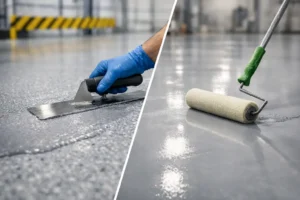
A garage floor usually tells the truth faster than the rest of the property. Oil marks, tyre wear, dust and surface cracking show up quickly, and once plain concrete starts to break down, the whole space looks tired. That is why an epoxy garage floor review matters. It is not just about whether the finish looks smart on day one. It is about how it performs under cars, tools, foot traffic and daily use over the next few years.
For many homeowners, landlords and commercial operators, epoxy sits near the top of the shortlist because it promises a cleaner, harder-wearing and more polished result than bare concrete. In the right setting, that promise holds up well. But epoxy is not the right answer for every garage, and the difference between a floor that lasts and one that peels often comes down to preparation, product choice and how the space is used.
Epoxy garage floor review: what you are actually buying
When people talk about epoxy flooring, they often mean very different things. At one end, there are thin DIY paints sold as epoxy coatings. At the other, there are professional resin systems designed to bond properly to prepared concrete and create a far more durable surface. That distinction matters.
A true epoxy floor coating is designed to protect the slab, improve appearance and make cleaning much easier. It can deliver a glossy or satin finish, solid colours, decorative flakes and a much sharper overall look than untreated concrete. In a domestic garage, that often means the space feels less like a storage zone and more like a finished part of the property.
The performance side is just as important. A good epoxy system resists stains, reduces dust and stands up well to light to moderate vehicle traffic. It also creates a more professional-looking surface for workshops, utility garages and mixed-use spaces where appearance matters alongside durability.
Where epoxy performs well
Epoxy is at its best in enclosed garages with a sound concrete base and predictable use. If the slab is dry, properly prepared and structurally stable, epoxy can provide a tough, attractive finish that lifts the whole space. It is especially effective where clients want a floor that is easy to sweep, easy to mop and far more resistant to spills than bare concrete.
That makes it a strong option for standard family garages, home workshops, storage areas and some light commercial settings. It also suits property owners who care about presentation. A clean resin-coated floor changes the feel of the room immediately. It looks brighter, more finished and easier to maintain.
From a visual point of view, epoxy also gives more design control than many people expect. You are not limited to plain grey. Different colours, decorative flake blends and sheen levels can create anything from a practical industrial look to a sharper showroom-style finish.
The trade-offs most reviews miss
A lot of positive reviews focus on the appearance straight after installation, and fair enough – a freshly laid epoxy floor can look excellent. The problem is that looks alone do not tell you how well the system was specified.
The first trade-off is sensitivity to preparation. Epoxy does not hide poor concrete, moisture issues or contamination. If the slab has oil soaked into it, if damp is pushing up from below, or if the surface has not been mechanically prepared properly, failure can happen early. Peeling, bubbling and patchy adhesion are rarely caused by the product alone. More often, they point to a problem beneath it.
The second trade-off is impact and movement. Epoxy is hard-wearing, but it is not flexible. In garages where the slab moves, cracks continue to develop, or heavy point loads are common, a rigid coating may show wear sooner than expected. That does not make epoxy poor value. It simply means the substrate and use case need to be assessed honestly.
The third is slip resistance. High-gloss finishes look sharp, but if the floor gets wet, they can become slippery unless texture or anti-slip additives are built into the system. For a garage used in all weather, especially in Northern Ireland where wet conditions are hardly unusual, that detail should never be an afterthought.
Durability in real-world use
If you want a balanced epoxy garage floor review, durability has to be judged properly. A professionally installed epoxy system can last well for years in a domestic garage, but the phrase professionally installed is doing a lot of work there.
In normal home use, epoxy usually deals well with parked cars, bicycle traffic, footfall, shelving and occasional spills. It also performs better than bare concrete when it comes to resisting tyre marks, brake dust and general grime. Cleaning is straightforward because dirt sits on the surface rather than working into the slab.
Where epoxy can struggle is in harsher environments. Constant heavy traffic, frequent hot tyre loading, aggressive chemicals or repeated impact from machinery can push a standard epoxy system beyond its ideal range. In those cases, another resin technology may be the better fit. That is why a one-size-fits-all sales pitch should always raise concerns.
Cost versus value
Epoxy is rarely the cheapest way to cover a garage floor, but price alone misses the bigger picture. The real question is whether the system improves the lifespan, appearance and usability of the space enough to justify the spend.
For many property owners, the answer is yes. A well-installed epoxy floor can reduce maintenance, improve presentation and make an ordinary garage feel like a proper extension of the property. That matters if you use the space regularly or want to improve resale appeal.
Still, value depends on the specification. A low-cost coating applied over poor preparation may look good briefly and then fail early. A properly prepared and installed system costs more at the outset but is usually the better investment. This is one of those areas where buying cheap often means paying twice.
Installation quality is the deciding factor
No epoxy garage floor review is complete without saying this clearly – installation matters as much as the material itself.
Concrete has to be assessed, repaired where necessary and mechanically prepared so the coating can bond correctly. Moisture testing should be considered where there is any doubt. Cracks, laitance, contamination and old residues all need to be dealt with before the first coat goes down. Skip that stage and the finish is already compromised.
Application conditions matter too. Temperature, curing time and product compatibility all affect the final result. This is why professional resin contractors tend to deliver a finish that lasts longer and performs more consistently than many DIY kits. The product may sound similar on the tin, but the finished floor often is not.
For clients who want a garage floor that looks sharp and stays that way, specialist installation is not a luxury. It is the main safeguard against failure.
Epoxy garage floor review for looks and maintenance
On appearance, epoxy scores highly. It creates a clean, unified finish that instantly upgrades dull concrete. Even a simple solid-colour system makes the space feel lighter and more considered. Add decorative flakes and the result can look far more bespoke than most people expect from a garage floor.
Maintenance is another strong point. Dust control improves, spills are easier to wipe away and routine cleaning becomes far simpler than it is on bare concrete. That is a major advantage for anyone using the garage for more than parking.
That said, maintenance-free is a stretch. Sharp impacts can chip some systems, grit can mark high-gloss finishes over time and neglected spills are still better cleaned promptly. Epoxy reduces hassle, but it does not remove the need for basic care.
Is epoxy the best option for every garage?
Not always. If the slab has ongoing damp issues, if the garage sees heavier industrial use, or if downtime needs to be kept to an absolute minimum, other resin systems may be more suitable. Polyaspartic and MMA technologies, for example, can offer faster cure times or different performance benefits depending on the environment.
That is where specialist advice becomes valuable. A good contractor will not force epoxy into every scenario just because it is familiar. They will look at the condition of the floor, the expected traffic, the finish you want and how quickly the area needs to return to service. At Surface King, that practical approach is what separates a resin system that simply sounds good from one that genuinely performs.
So, is epoxy worth it? If your garage has a sound base, your expectations are realistic and the installation is handled properly, epoxy remains one of the strongest all-round options available. It delivers a clear visual upgrade, better day-to-day cleanliness and reliable protection for the concrete underneath. The smartest decision is not choosing the cheapest coating or the glossiest photo. It is choosing a system that matches the way your garage is really used, because that is what turns a smart finish into a lasting result.