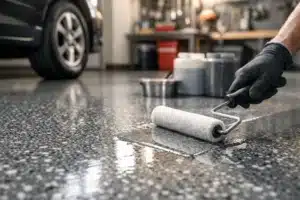
A damaged shop floor does more than look poor. Dust gathers in cracks, spills become harder to clean, pallet lorries catch on broken edges and staff spend more time working around the surface than on the job itself. The right shop floor resin coatings create a clean, hard-wearing finish designed around the way your workplace actually operates – from busy workshops and retail backrooms to production areas, kitchens and warehouses.
Choosing a resin system is not simply a matter of picking a colour and applying a coating. Traffic levels, moisture, chemicals, downtime and the condition of the existing concrete all affect the result. A properly specified floor can transform a tired work area into a safer, brighter and easier-to-maintain part of your premises.
What a resin shop floor needs to withstand
Commercial floors are judged every day, often without anyone saying so. A warehouse floor may carry forklifts, loaded racking equipment and constant wheeled traffic. A vehicle workshop may face oil, fuel, tyre marks and dropped tools. In food preparation, healthcare or hospitality settings, hygiene and frequent cleaning can be the priority.
Resin flooring is built to form a continuous protective layer over a suitably prepared base. Unlike worn concrete, it does not rely on open joints and porous surfaces that hold dirt and moisture. The result is a practical floor that is easier to sweep, wash and inspect, while also presenting a more professional image to staff, visitors and customers.
The best system depends on the site. Heavy mechanical use calls for different build-up and aggregate choices than a showroom, while a wet area may need a textured anti-slip finish. Getting this balance right matters. An overly smooth surface can be unsuitable where water or oil is present, but an excessively rough finish may make cleaning more difficult.
Shop floor resin coatings: choosing the right system
The three main resin technologies used for commercial floors each have clear strengths. There is no single best option for every property, but there is usually a sensible choice once the working environment has been assessed.
Epoxy for hard-wearing everyday performance
Epoxy is a proven choice for workshops, warehouses, retail stock areas and many industrial environments. It can provide a durable, attractive, easy-clean finish with good resistance to everyday wear and a wide range of colours. It is particularly effective where the client wants a high-quality upgrade to sound concrete without unnecessary complexity.
Epoxy does require careful preparation and appropriate curing time. If a site cannot close for long, that timing needs to be planned before work starts. It can also be affected by moisture in the slab, which is why a professional survey and moisture assessment are worth carrying out rather than treating the floor as a quick paint job.
MMA where downtime must be kept low
MMA, or methyl methacrylate resin, is known for its rapid curing properties. It can be an excellent solution for retail, hospitality, food-related spaces and operational facilities where closing an area for several days is simply not practical. In the right conditions, it can be installed and returned to service far faster than many conventional systems.
That speed comes with a more demanding installation process. MMA has a noticeable odour while being applied, so ventilation, access and neighbouring occupants must be considered. For businesses working against a tight reopening date, however, the ability to complete a durable floor quickly can outweigh that temporary inconvenience.
Polyaspartic for fast cure and strong finish
Polyaspartic systems offer another fast-curing option, often selected when a clean appearance, good UV stability and quick return to use are required. They can suit commercial spaces that need a polished, long-lasting coating without lengthy interruption.
They are not a substitute for preparation. Even the highest-performing resin will only bond as well as the concrete below it allows. Surface repair, mechanical preparation and the correct primer remain central to a floor that lasts.
Preparation decides the life of the floor
Most premature coating failures start below the visible surface. Concrete may look solid but still have laitance, old paint, oil contamination, weak patches or hidden moisture issues. Applying resin over those problems can lead to peeling, bubbling or local breakdown once traffic resumes.
A specialist contractor will assess the slab before recommending the system. This commonly includes checking cracks, joints, falls, damp conditions and the demands of the space. Mechanical diamond grinding or shot blasting creates the correct surface profile for adhesion. Loose material is removed, repairs are completed and the area is thoroughly cleaned before primers and resin layers are applied.
This stage can feel less dramatic than choosing colours or watching the final coat go down, yet it is where workmanship shows. A quality installation is not just about a glossy finish on day one. It is about keeping that finish bonded and performing through years of use.
Design that improves the working environment
Industrial flooring does not need to be dull. A well-planned resin floor can make a workplace feel brighter, cleaner and more organised, particularly when replacing stained concrete or failed paint. Light grey and mid-grey finishes are popular because they disguise everyday marks while improving reflected light across the shop floor.
Colour can also support how the space works. Walkways, work zones, loading areas and safety boundaries can be clearly defined using contrasting shades. In customer-facing commercial areas, bespoke colours, borders and incorporated logos can give a practical floor a more considered, branded appearance.
Decorative features should always support the purpose of the floor. A busy production area may benefit most from clear visual zoning and an anti-slip aggregate. A showroom may prioritise a smooth, refined finish. Surface King helps clients match the look of the floor to the demands placed on it, rather than forcing one standard system onto every project.
Plan installation around your operation
The cost of a resin floor is only one part of the decision. A cheaper coating that fails early, interrupts operations or requires frequent patch repairs can become the more expensive option. It is better to consider the full picture: preparation needs, resin type, thickness, anti-slip requirement, access restrictions and the time available before the floor must be used again.
For an occupied site, installation can often be phased. Completing one section at a time may allow essential work to continue elsewhere, provided traffic routes and curing periods are managed safely. Clear communication with staff is equally important, particularly where machinery, deliveries or public access are involved.
Before work begins, make sure the contractor understands what moves across the floor, what may spill onto it and how it is cleaned. Details such as forklift turning points, hot tyres, wheeled bins, chemical use and drain locations can change the recommended specification.
Keeping a resin floor looking its best
Resin floors are low maintenance, not no-maintenance. Regular dry cleaning removes abrasive grit that can gradually dull the surface. Spills should be dealt with promptly, especially oils, chemicals and strongly coloured products. For routine washing, use suitable cleaning products and avoid aggressive methods that are not recommended for the installed system.
A floor should also be inspected periodically around doorways, joints, drains and areas of concentrated traffic. Early repair of a damaged section helps protect the wider surface and keeps the premises looking professionally maintained. With the right cleaning routine and sensible use, a professionally installed resin floor can continue to deliver a strong visual impression as well as reliable day-to-day performance.
If your current shop floor is cracked, dusty, stained or difficult to clean, the best next step is a site-specific conversation. A clear assessment of the base, the workload and the available downtime will point to a resin system that keeps your business moving and gives the space the finish it deserves.