A narrow, cracked route between the back door and the garden quickly makes an otherwise well-kept property feel unfinished. The best resin path ideas solve that problem with a clean, continuous surface that is practical underfoot and designed to complement the wider outdoor space. From a subtle natural-stone finish to a bold bordered walkway, resin gives homeowners far more freedom than plain concrete, loose gravel or ageing slabs.
For homes across Belfast and Northern Ireland, a resin-bound path can also be a sensible answer to wet weather, muddy shoes and awkward garden levels. It is hard-wearing, low-maintenance and, when installed on the right permeable base, helps water drain through the surface rather than sitting in puddles.
Resin Path Ideas That Improve the Whole Garden
A path should do more than take people from A to B. It can draw the eye towards a patio, connect a driveway to a side gate, frame planting areas or make a compact garden feel more organised. Resin-bound surfacing is particularly effective because there are no loose stones to scatter into beds or onto lawns, and no obvious joints for weeds to exploit.
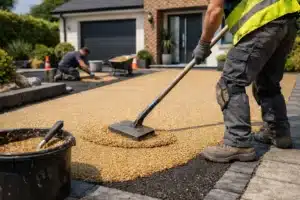
One of the strongest options is to continue the same aggregate blend from the driveway into a side or rear garden path. This creates a deliberate, high-quality look from the front boundary to the outdoor living area. A lighter blend can brighten a shaded side passage, while warm gold, amber and brown aggregates sit naturally beside timber fencing, brickwork and traditional planting.
For a more contemporary property, grey and silver blends provide a crisp contrast against black fencing, porcelain patios or rendered walls. Charcoal edging around a lighter central field is a particularly effective choice. It gives the path definition, helps guide the eye along a route and makes the surface look considered rather than simply functional.
Curved paths are another opportunity to make a garden feel more spacious. Instead of cutting directly across a lawn, a gentle curve can lead towards a seating area, summerhouse or feature tree. Resin is laid as a smooth, joint-free finish, so it is well suited to sweeping lines that would be more difficult to achieve neatly with paving slabs.
Use Borders to Create a Bespoke Finish
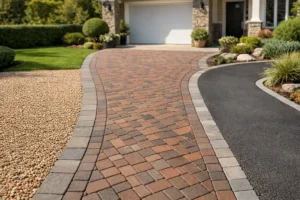
A contrasting border is one of the simplest ways to elevate a resin path. It can match a driveway border, pick out the colour of the front door or create a visual link with the patio. On a narrow path, a slim dark edge is often enough. On a wider garden route, a more substantial border can make the installation feel like a designed landscape feature.
The border does not always need to run on both sides. A single contrasting line can define the lawn edge, while the opposite side blends into planting or a wall. This approach works especially well in gardens where the path follows an irregular boundary.
Patterned details can also be incorporated, although restraint is usually the best choice. A simple compass-style feature near a patio, a house number at the entrance to a side passage, or a clean geometric band can add character without overwhelming the space. The goal is a path that still looks smart years from now, not a finish that dates quickly.
Match the Path to How the Space Is Used
The right layout depends on who uses the route and what they carry along it. A short path from the driveway to the front door may only need enough width for two people to pass comfortably. A rear garden route used for bins, prams, bikes or wheelbarrows needs more generous clearance and carefully planned turning space.
For properties with pets, resin-bound surfacing offers a tidy route that is easier to sweep and wash down than gravel. Around sheds and utility areas, it can reduce mud and prevent loose aggregate being tracked indoors. Landlords can also benefit from a clean, durable path that helps communal or rental outdoor spaces look properly maintained between tenancies.
If a path leads to a patio, consider the transition. Using the same blend creates a unified look, while changing colour at the patio edge makes each zone feel distinct. Neither approach is automatically better. A small courtyard may benefit from one continuous surface, whereas a larger garden often looks stronger with clear visual areas.
Resin Bound or Resin Bonded for Garden Paths?
The terms are often confused, but the systems perform differently. Resin-bound surfacing combines kiln-dried aggregate and resin before installation. The finished surface has a smooth, stone-textured appearance, with gaps between the individual stones that allow water to pass through when laid over a suitable permeable construction.
Resin-bonded surfacing applies resin to a base before loose aggregate is scattered and bonded to it. It can provide a more textured, loose-stone appearance, but it is not generally the first choice for a comfortable, bare-foot-friendly or wheelchair-friendly garden path. For most domestic paths, resin bound provides the cleaner, more even finish homeowners expect.
The right recommendation still depends on the site. A steeply sloped route, a heavily shaded area, an entrance exposed to vehicle traffic or a path joining several existing levels may need a specific detail or preparation method. Good surface performance starts below the decorative stone, not on top of it.
The Base Determines How Long a Resin Path Lasts
Resin is not a cover-up for a failing surface. If the existing concrete is cracked, moving or holding water, laying a new finish straight over it may only hide the problem temporarily. The sub-base, drainage and edge restraints all need to be assessed before work begins.
A sound tarmac base is often an excellent foundation for resin-bound paths. Where a new path is being created over soil, a properly designed permeable base can support the surface while allowing rainfall to drain naturally. This can be especially valuable in Northern Ireland, where frequent rain exposes weak construction very quickly.
Levels also matter. The finished path must sit neatly against door thresholds, drains, lawn edges and patio areas. A professional installer will plan these details before the resin is mixed, preventing avoidable issues such as water running towards the property or an awkward step at a doorway.
Edging is equally important. Strong, secure edges contain the surface and protect its crisp outline. Depending on the design, this may be a resin border, kerbs, paving setts, brickwork or metal edging. The best option should suit the garden style as well as the practical demands of the route.
Colour Choices That Stay Practical
Pale cream and bright white aggregates can look striking, but paths beneath trees or beside busy entrances may show dirt more readily. Mid-toned blends of beige, bronze, grey and brown are often the most forgiving choice for everyday family gardens. They still bring warmth and texture while disguising leaf marks, soil and general foot traffic.
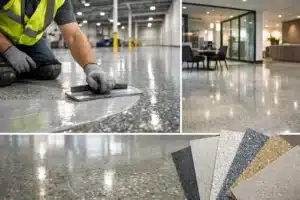
Dark colours have their place, particularly for modern homes and bold borders, but they can make a narrow shaded route feel enclosed. A balanced mix with lighter aggregate flecks usually gives depth without making the area feel gloomy. Sample boards are invaluable here, because aggregate colours can look different outdoors than they do in a brochure or under indoor lighting.
Think about the surrounding materials before choosing a blend. Red brick, buff stone, grey render, timber decking and porcelain paving all influence which tones will look right. Surface King can help homeowners compare finishes in the context of their property, rather than selecting a colour in isolation.
Keeping a Resin Path Looking Its Best
A properly installed resin-bound path is straightforward to maintain. Regular sweeping removes leaves, grit and soil before they settle into the texture of the surface. A gentle wash with clean water can freshen the path after winter, while prompt attention to spills helps preserve its appearance.
Avoid harsh chemicals, aggressive pressure washing and dragging heavy metal items across the surface. These can damage the resin or dislodge aggregate. In shady gardens, trimming back overhanging vegetation and keeping the route clear of organic debris will also reduce the chance of algae forming.
The most successful resin path ideas begin with a practical question: where does this route need to work hardest? Start there, then choose the colour, border and layout that makes the journey through the garden feel intentional. A well-planned path does not simply improve access – it gives the entire outdoor space a finished, high-quality feel every time you step outside.