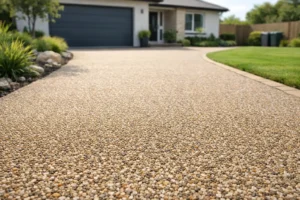
A driveway should not become the place where rainwater gathers, stains form and loose stone migrates onto the pavement. The most useful permeable paving trends 2026 are moving beyond appearance alone, giving homeowners and commercial property owners better drainage, stronger kerb appeal and surfaces designed to perform through Northern Ireland’s wet, changeable weather.
For many properties in Belfast and across Northern Ireland, the appeal is straightforward: replace a tired, puddle-prone surface with a decorative finish that looks considered and helps water drain where it falls. Resin-bound systems remain a major part of that conversation, but the best results depend on more than choosing a popular aggregate colour. Base preparation, drainage design, edging and correct installation all matter.
Permeable paving trends 2026: performance leads the design
The biggest change for 2026 is that customers are asking more informed questions. They still want an attractive driveway or courtyard, but they also want to know where surface water will go, how easily the area will clean, whether the finish will suit their property and what maintenance will be required over time.
This is shifting the market away from one-size-fits-all paving. A high-quality permeable surface is increasingly seen as part of the wider exterior design, working with falls, drains, planting, entrance steps and the architectural character of the property.
Resin-bound finishes remain the premium decorative choice
Resin-bound surfacing combines carefully selected decorative aggregate with a clear resin binder. When laid correctly over a suitable permeable base, it creates a smooth, porous surface with open voids that allow water to pass through.
Its popularity is not difficult to understand. Resin-bound driveways and pathways offer a clean, contemporary appearance without the loose movement associated with gravel. There are also extensive options for aggregate blend, border detail, curves and contrasting areas, allowing a driveway to complement brickwork, render, stone or landscaped gardens.
For 2026, expect to see more restrained, property-led colour choices. Natural golds, silvers, greys and warm neutral blends are likely to remain strong choices because they suit a broad range of homes and show less day-to-day dirt than very pale finishes. The trend is towards finishes that look distinctive without looking dated after a few seasons.
Borders and defined zones add a finished look
A single aggregate colour can look excellent, particularly on smaller driveways. However, more customers are using contrasting borders to frame parking areas, pathways and front entrances. A darker edge around a lighter central blend gives a driveway definition and can visually tidy irregular boundaries.
Defined zones are also increasingly practical. A contrasting resin-bound pathway can guide visitors from the gate to the front door, while a separate parking section can make a compact frontage feel better organised. On commercial sites, colour changes may help distinguish pedestrian routes from vehicle areas, subject to the requirements of the space.
The key is proportion. Strong patterns and too many colours can overpower a property. A specialist installer can use borders and transitions to add impact while keeping the overall surface smart and cohesive.
Drainage is no longer an afterthought
Heavy rainfall makes poor drainage obvious very quickly. Standing water, algae growth, splashback on exterior walls and water running towards a building are problems no new surface should create. That is why the most valuable permeable paving trend is not a colour or pattern – it is better drainage planning from the start.
A permeable resin-bound surface can support sustainable drainage principles, but it is not a shortcut around groundwork. The existing base must be assessed properly. In some cases, a sound permeable asphalt base may be suitable; in others, excavation and a new construction will be needed to achieve the right strength, levels and drainage performance.
Falls still matter. Water should be directed intelligently across the surface and away from the property. Soil conditions, ground levels, existing drainage and the amount of traffic the area receives all affect the correct specification. A decorative surface laid over an unsuitable or impermeable base will not deliver the drainage benefits people expect.
Permeable does not mean maintenance-free
Low maintenance is a genuine advantage, but it should not be confused with no maintenance. Leaves, mud, moss and fine debris can gradually reduce permeability if they are left to build up. Regular sweeping and occasional gentle cleaning help keep the surface looking fresh and allow water to move through it as intended.
For residential driveways, simple care is usually enough: remove leaf litter, avoid dragging sharp metal items across the finish and deal with oil spills promptly. Commercial areas may need a more planned cleaning routine, especially where footfall, vehicle traffic or nearby trees create extra debris.
Stronger bases for real-world use
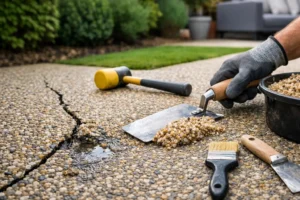
A beautiful surface is only as dependable as what sits beneath it. In 2026, there will be continued emphasis on properly engineered bases rather than cosmetic overlays that do not address cracking, movement or drainage problems below.
For driveways, the base needs to carry the expected vehicle loading without flexing or failing. For paths and patios, the construction can differ, but preparation remains essential. Weak edges, poor compaction and inadequate depth can all lead to avoidable issues later.
This is where a consultation-led approach adds value. Rather than treating every project as the same, the installer should consider how the space will be used. A family driveway with two cars, a courtyard used for deliveries and a quiet garden path have different demands. The right resin system and build-up should follow that assessment.
There is also a practical limit to where resin-bound surfacing is the best answer. Heavily trafficked areas, sharp turning points and locations exposed to frequent commercial vehicle movements may require a more specific design or another surface system. Good advice should explain those trade-offs clearly, not simply promise that one finish suits every application.
Outdoor spaces are becoming more coordinated
Driveway upgrades are increasingly linked to the wider front and rear garden. Homeowners want the entrance to feel like a complete improvement rather than a new surface dropped into an unchanged space. That means resin-bound paving is being specified alongside porcelain steps, retained planting, fresh edging, feature lighting and refreshed boundaries.
The trend is especially effective on properties where space is limited. Using the same aggregate blend across a driveway, path and small patio can make the frontage feel larger and more connected. Introducing one complementary border colour creates a polished transition without making the area feel busy.
At the rear of the property, permeable pathways and courtyards can offer a practical alternative to uneven slabs or loose gravel. The surface is comfortable underfoot, easy to sweep and available in blends that can either soften a garden setting or create a more contemporary entertaining area.
Commercial paving demands a clear specification
For hospitality venues, retail entrances, healthcare settings and managed residential sites, appearance has a direct effect on first impressions. But commercial decision-makers also need confidence in access, cleanability, safety and durability.
The 2026 direction is towards decorative surfaces that do a practical job without creating unnecessary maintenance demands. Resin-bound paving can be a strong option for entrance approaches, pedestrian routes, courtyards and feature areas where a smart, welcoming finish is required. Bespoke borders, colour zoning and even branded design elements can help a site look intentional rather than generic.
However, commercial projects should never be specified on appearance alone. Vehicle loading, service access, gradients, drainage channels, slip considerations and downtime all need to be addressed before work begins. For industrial interiors or high-demand commercial floors, a specialist resin flooring system such as MMA, epoxy or polyaspartic may be more appropriate than an exterior decorative aggregate finish.
Choosing a permeable surface that will still look right in five years
Trends are useful, but lasting value comes from choosing a design that suits the building and a construction that suits the ground. A fashionable pale aggregate may look striking in a brochure, yet a mid-tone blend could be the more forgiving choice for a busy driveway beneath mature trees. A bold border may transform a large frontage, while a smaller path may benefit from one clean, uninterrupted colour.
Ask how the proposed surface will manage water, what lies beneath the existing paving, whether the chosen blend suits the amount of use and how the edges will be finished. These questions reveal far more about the quality of a project than a sample board alone.
Surface King works with homeowners and commercial clients who want more than a quick cover-up. The aim is a high-quality surface that improves how the property looks, works and feels from the moment people arrive.
A well-planned permeable driveway or pathway is a visible upgrade every day, but its real value appears when the rain comes. Start with the ground conditions, choose a finish that belongs with the property, and let the design earn its place for years to come.