A delivery lorry reversing into the same bay every day puts a surface under very different pressure from a family car parked on a driveway. The question, is resin suitable for heavy vehicles, therefore cannot be answered with a simple yes or no. The right resin system, installed over the right base, can perform exceptionally well under demanding commercial traffic. A decorative resin driveway system selected without considering load, turning forces and ground preparation may not.
For projects across Northern Ireland, the key is matching the surface specification to the vehicle activity. That means looking beyond the finished appearance and assessing what happens beneath the wheels: vehicle weight, frequency of use, braking, steering, loading points and the condition of the existing sub-base.
Is resin suitable for heavy vehicles in practice?
Resin can be suitable for heavy vehicles, but only when it is designed as a heavy-duty surface system rather than treated as a decorative finish alone. A high-quality industrial resin floor, for example, can be specified for forklifts, pallet trucks, delivery vehicles and busy operational areas. Likewise, a correctly designed external resin aggregate surface can be used in certain commercial access areas.
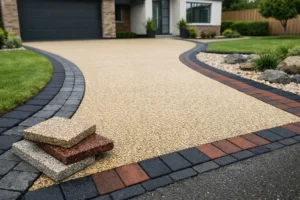
The important distinction is between resin types and intended applications. Resin bound surfacing is widely chosen for driveways, paths, courtyards and forecourts because it creates an attractive, permeable, stone finish. It performs very well under normal domestic vehicle use and light commercial traffic when laid on a suitable, stable base.
However, regular HGV movements, articulated lorries, skip wagons or heavily loaded vehicles require more than a standard decorative driveway specification. These vehicles create concentrated loads, especially when stationary, and high shear forces as tyres turn. If the base flexes or the resin finish is too thin for the use, cracking, rutting or stone loss can follow.
Resin bonded systems should also be considered carefully. They deliver the look of loose aggregate while the stone is bonded to the surface, but they are not normally the first choice for areas exposed to constant heavy vehicle manoeuvres. For a loading bay, warehouse, workshop or industrial yard, specialist industrial resin flooring or a purpose-built tarmac or concrete system may be the better solution.
The base carries the load, not just the resin
One of the most common mistakes is assuming that a thicker resin layer alone will make a surface capable of taking heavy vehicles. Resin is the wearing course. The structural strength comes from the layers beneath it.
A heavy-use surface needs a properly engineered foundation with adequate depth, compaction and drainage. In many external settings, this may involve a well-constructed tarmac base or reinforced concrete, depending on the intended traffic and site conditions. The base must be sound, level and free from movement before the resin system is applied.
Existing concrete can sometimes provide an excellent foundation, provided it is structurally stable and prepared correctly. Existing tarmac may also be suitable, but it must be in good condition with no widespread cracking, depressions or soft areas. Covering an unstable base simply hides the problem temporarily. Heavy loads will soon expose it again.
Ground conditions matter as well. Poor drainage, weak subsoil and water sitting beneath the surface can compromise even a high-quality installation. On commercial sites, it is worth assessing where water runs, where vehicles wait and where loads are transferred. These details shape a specification that lasts.
Turning forces are often the real issue
A lorry travelling slowly in a straight line is not always the greatest risk. Damage often occurs where heavy vehicles turn sharply, brake repeatedly or reverse into confined spaces. Tyres grip the surface and twist against it, producing powerful lateral forces.
This is why entrances, loading bays, bin store approaches, service yards and tight turning circles need special attention. A surface that is suitable for occasional straight-through access may not be suitable for daily turning by loaded vehicles. In these areas, Surface King would assess whether a specialist resin system is appropriate or whether a more structural surfacing solution should take the heaviest traffic.
Choosing the right resin system for the job
There is no single product called “resin flooring” that suits every site. Material selection should follow the operational demands of the area.
For external domestic driveways and lighter-use commercial spaces, UV-stable resin bound aggregate can offer an impressive balance of appearance, drainage and durability. It is easy to maintain, available in a wide choice of natural stone colours and can be finished with contrasting borders or bespoke design details. With a properly prepared base, it is an excellent option for cars, vans and typical household traffic.
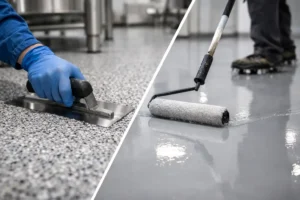
For internal commercial and industrial environments, epoxy, MMA and polyaspartic systems can be specified for much tougher conditions. These technologies can provide hard-wearing, easy-to-clean floors with resistance to abrasion, chemicals and frequent wheeled traffic. They are particularly useful in workshops, retail back-of-house areas, manufacturing spaces, healthcare environments and warehouses.
MMA resin systems are often valued where downtime must be kept to a minimum because they can cure quickly. Epoxy offers a durable, professional finish for many industrial settings, while polyaspartic coatings can combine rapid curing with strong wear resistance. The correct choice depends on the substrate, temperature, cleaning regime, chemical exposure and level of traffic.
Questions to answer before specifying resin
Before selecting a resin surface for a heavy-use location, a professional survey should establish a few practical facts. What is the heaviest vehicle expected on site? Is it occasional access or repeated daily use? Will vehicles turn, queue, load or unload in one location? Is the area outdoors, exposed to standing water and frost, or indoors where spills and cleaning chemicals are a concern?
It is also essential to identify whether the surface must be permeable. Resin bound aggregate can support a permeable driveway design when combined with the appropriate open-graded base layers. Yet permeability alone should not dictate the final construction. Where frequent heavy traffic is expected, structural performance comes first, and drainage must be designed around it.
For properties with occasional deliveries, a practical approach may be to keep the main driveway in decorative resin bound aggregate while reinforcing or surfacing the delivery route separately. This protects the visual impact of the entrance while giving the heaviest vehicle movements a surface built for the task.
Installation quality determines long-term performance
Even the best resin materials cannot compensate for rushed preparation or poor mixing. Aggregate must be dry and correctly graded, resin components must be mixed accurately, and the material must be laid at the correct depth in suitable weather conditions. Edges, transitions, drainage channels and expansion joints must all be planned properly.
For industrial floors, surface preparation is equally critical. Concrete may need mechanical preparation to remove contaminants and create the right profile for adhesion. Moisture levels must be checked, repairs completed and primers selected to suit the substrate. These are not cosmetic steps. They directly affect whether the floor performs under vehicle traffic or begins to delaminate.
A quality installation also includes sensible curing time. Putting vehicles onto a resin surface before it has fully cured can damage the finish before the site is back in operation. Programme planning should allow for the chosen product, weather conditions and the return of traffic.
Maintenance for areas used by heavy vehicles
Resin surfaces are valued because they are low maintenance, not because they are maintenance-free. Routine sweeping removes abrasive grit that can wear the surface over time. Promptly cleaning fuel, oil, hydraulic fluid and chemical spills helps protect both appearance and performance.
Regular inspections are worthwhile in heavy-use areas. Look for movement at joints, early cracking in the underlying base, loose stones, wear around turning zones and drainage issues. Addressing a small defect quickly is far more cost-effective than waiting for water ingress or base movement to spread.
Where a yard or floor has mixed traffic, operational controls can make a difference too. Marking vehicle routes, avoiding unnecessary tight turns and keeping heavy loads away from decorative-only zones all extend surface life.
A surface should be specified, not guessed
Resin delivers outstanding results when its strengths are used properly: a clean, durable finish, strong visual impact and a system tailored to the site. For cars, vans and many commercial settings, resin can be a long-lasting upgrade from tired tarmac, concrete or paving. For heavy lorries and intensive industrial traffic, the answer depends on a detailed assessment of the base, load pattern and resin technology.
A proper site consultation turns that uncertainty into a clear plan. By matching the material and groundwork to the vehicles that will actually use the area, you can create a surface that looks the part on day one and continues to perform when the hard work begins.