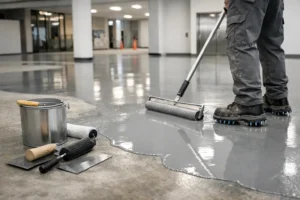
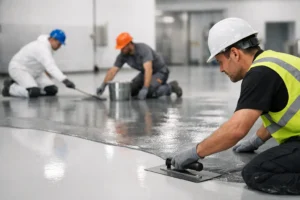
A warehouse floor has to do far more than look tidy. It carries forklift traffic, pallet loads, dropped tools, tyre marks, spillages and constant footfall, often across long operating hours. An epoxy floor coating for warehouses can turn a dusty, difficult-to-clean concrete slab into a hard-wearing, professional surface that supports safer and more efficient day-to-day work.
The right system is not simply a matter of choosing a colour and applying a coating. The condition of the concrete, the traffic moving across it, the substances used on site and the downtime available all shape the correct specification. Get those details right and an epoxy floor can deliver a major visual and practical upgrade for years to come.
What epoxy flooring brings to a warehouse
Epoxy is a resin flooring system designed to bond securely to a properly prepared concrete base. Once cured, it creates a continuous protective layer rather than a floor broken up by joints, loose dust and porous patches. That makes routine cleaning faster and gives facilities teams a much clearer view of the floor condition.
For busy warehouses, the main benefit is protection. Bare concrete can wear, powder and absorb oil, lubricants and other contaminants. A quality epoxy system helps resist abrasion and many common industrial spillages, reducing the risk of staining and making it easier to keep loading, storage and picking areas presentable.
There is a strong commercial benefit too. A clean, clearly finished floor can make aisles, work zones and walkways easier to define. Coloured bays, line markings and safety borders can be built into the scheme, helping staff and visitors move through the space with greater confidence. For businesses that welcome clients, auditors or delivery partners onto site, it also creates a far more professional impression.
Epoxy is particularly well suited to dry internal warehouses, production areas, stockrooms, workshops and distribution spaces where a durable, easy-to-clean finish is required. It is not a cure for a failing slab, however. Cracks, moisture issues and weak concrete need to be addressed before coating begins.
Specifying epoxy floor coating for warehouses
Warehouse flooring should be specified around the operation, not a generic product description. A light-storage facility with pedestrian traffic has very different demands from a dispatch centre running loaded forklift lorries throughout the day.
Start with traffic and loading
Ask how the floor is actually used. Consider the weight and frequency of forklift movements, turning points, racking legs, pallet lorries and wheeled equipment. Repeated turning movements can place significant stress on a floor finish, especially at aisle ends, loading zones and entrances.
A thicker, more heavily built epoxy system may be the better choice where traffic is frequent and concentrated. In some cases, a broadcast system using graded aggregate between resin layers adds greater build and texture. This can provide improved wear resistance and a more industrial finish than a thin coating alone.
The floor should also be planned around impact. Epoxy provides excellent protection against normal warehouse use, but sharp impacts and severe point loads can still damage any resin surface. Loading areas may need additional consideration, particularly where metal stillages, heavy machinery or uneven pallets are regularly placed down.
Match slip resistance to the task
A smooth gloss floor is easy to clean and can brighten a warehouse, but it may not be the right answer in every area. Entrances exposed to rain, washdown zones and locations where oil or liquids are handled often need an anti-slip finish.
More texture generally improves grip, but it can also make deep cleaning more demanding. The best approach is to use the level of slip resistance that fits each zone. A warehouse does not need one identical finish from wall to wall. For example, a cleanable smooth finish may suit storage aisles, while a more textured system suits loading doors or wet process areas.
Choose practical colours and markings
Light grey remains a popular warehouse floor colour because it improves brightness without showing every scuff as quickly as white. Mid-grey, blue and green are also practical options, while contrasting colours can separate pedestrian routes, fire exits, dispatch lanes and equipment zones.
Floor markings should be part of the original plan rather than an afterthought. When lines and borders are integrated within the resin system, they look sharper and are less likely to wear away than basic painted markings. This is particularly valuable where safe segregation between people and moving vehicles is a priority.
Preparation decides the life of the floor
The most attractive epoxy finish will only perform as well as the concrete beneath it. Preparation is where a specialist contractor earns their value, because it identifies problems before they become costly failures.
The floor is first assessed for contamination, surface strength, cracks, joints and moisture. Oil-soaked concrete, old paint, laitance and weak surface material must be removed. Mechanical preparation, commonly through diamond grinding or shot blasting, opens the concrete and creates the clean profile needed for the resin to bond effectively.
Cracks and damaged areas should then be repaired using suitable resin materials. Movement joints require particular care. They are designed to allow the concrete to move, so they cannot simply be covered over and forgotten. Depending on the location and system design, joints may need to be retained, filled with a flexible material or detailed to manage movement correctly.
Moisture is another critical factor. Concrete can look dry at the surface while still holding moisture vapour below. If the slab has no effective damp proof membrane, has recently been laid or sits in a damp environment, the system may require a moisture-tolerant primer or vapour-control layer. Skipping this stage can lead to blistering, poor adhesion and premature failure.
This is why a low price based on a quick coat can become expensive later. Proper preparation takes equipment, skill and time, but it is the foundation of a long-lasting warehouse floor.
Installation planning and downtime
Epoxy flooring must be installed in conditions that allow it to cure properly. Temperature, humidity and the condition of the substrate all matter. In Northern Ireland, cold or damp conditions can affect programme times, especially in unheated buildings, so the project should be planned around the environment rather than a fixed promise of next-day use.
A typical system may include a primer, one or more body coats and a protective topcoat. Each layer needs its own curing period. The floor can often be walked on before it is ready for forklifts or full loading, and putting traffic onto it too soon can mark or damage the finish.
For a live warehouse, phased installation can reduce disruption. Work can be divided by bay, aisle or department, with stock and equipment moved in sequence. Clear scheduling is essential because access restrictions, cleaning requirements and curing windows need to align with the operation.
Where shutdown time is extremely limited, epoxy may not always be the best resin option. Fast-curing MMA or polyaspartic systems can return certain areas to service more quickly. They can be a stronger fit for urgent refurbishments, cold environments or sites that cannot release a floor for extended periods. The trade-off is that these systems have different application requirements and can carry a higher material cost.
When epoxy is not the automatic answer
Epoxy is a proven choice, but it depends on the environment. Areas exposed to direct sunlight can experience colour change over time, so a UV-stable topcoat or an alternative resin may be preferable near large glazed doors or external thresholds.
Likewise, sites subject to rapid temperature changes, thermal shock or regular hot washdowns may need a specialist system designed for those demands. Food production, chemical processing and heavy engineering facilities can require more than a standard warehouse coating. The right answer comes from understanding the specific risks, not from applying the same finish everywhere.
A site survey should examine the substrate and the working conditions before a specification is recommended. Surface King can assess the space, explain the suitable resin options and create a flooring plan that balances performance, appearance and programme requirements.
A warehouse floor should support the way your business operates, not become another maintenance problem. Start with an honest assessment of the concrete and the traffic it handles, then choose a system built to keep the space cleaner, safer and ready for work.