Heavy rain exposes weak surfacing fast. Puddles sit on the surface, gravel migrates into borders, block paving sinks in spots, and what looked tidy a year ago starts to feel like a constant maintenance job. That is why more property owners are comparing permeable driveway options before committing to a new surface. The right choice does more than improve kerb appeal – it helps manage surface water properly, keeps the driveway usable in poor weather, and delivers a finish that still looks sharp after daily traffic.
For homeowners, landlords and commercial clients alike, the key question is not simply which surface lets water through. It is which system gives you the best balance of appearance, lifespan, maintenance and installation quality. Some options are cost-led. Some are design-led. Some perform brilliantly when installed on the right base but disappoint when corners are cut. That is where specialist advice matters.
What permeable driveway options actually do
A permeable driveway is designed to allow rainwater to pass through the surface or between joints and drain into the structure below, rather than running straight off into gullies or pooling on top. In practical terms, that can reduce standing water, support sustainable drainage, and improve the day-to-day performance of the driveway.
That does not mean every porous-looking surface performs the same way. The visible finish is only part of the system. The real performance depends on the sub-base, the drainage design, ground conditions and the way the surface is laid. A poor installation can undermine even the best material. A high-quality system, installed properly, gives you a cleaner finish, better drainage and a longer-lasting result.
The main permeable driveway options for UK properties
Resin bound stone
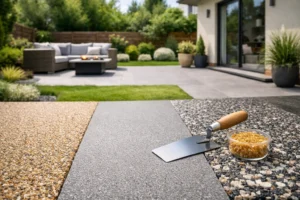
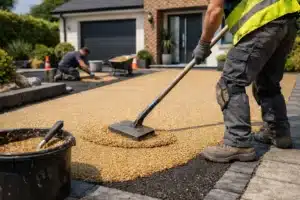
Resin bound is one of the strongest choices when clients want drainage performance without compromising on appearance. It is made by mixing decorative aggregate with resin and trowelling it into a smooth, porous finish. Water drains through the surface rather than sitting on top, provided it is laid over a suitable permeable base.
This option stands out because it looks premium and stays neat. There is no loose stone to scatter, no broad joints for weeds to exploit, and the finish can be tailored with different stone blends, borders and patterns. For driveways, paths, patios and courtyards, it offers a clean, modern upgrade that suits both traditional and contemporary properties.
The trade-off is that quality matters at every stage. Resin bound is not the cheapest surface upfront, and it should never be treated as a quick cosmetic overlay if the base underneath is failing. But when the groundwork and installation are done correctly, it is one of the most reliable and visually impressive permeable solutions available.
Permeable block paving
Permeable block paving uses specially designed blocks with wider joints or drainage gaps that let water pass into the sub-base below. It appeals to clients who like the familiar look of paving and want a structured, traditional finish.
It can work well on domestic driveways and larger commercial areas, especially where a modular look is preferred. Repairs can also be more straightforward in localised sections because individual blocks can be lifted and replaced.
Its weakness is long-term neatness. Even good-quality block paving can be vulnerable to movement, joint loss and weed growth over time, particularly if installation standards slip. It can still be an effective option, but it usually requires more ongoing attention than a well-installed resin bound driveway.
Gravel
Gravel remains a common permeable surface because it is simple, widely available and often budget-friendly. Water drains through it easily, and it can suit rural homes or larger properties where a softer, more informal look is appropriate.
The downside is obvious to anyone who has lived with it. Gravel moves. It travels onto paths, roads and thresholds, forms ruts under vehicle wheels, and needs regular topping up and raking to stay presentable. It can also be awkward for pushchairs, wheelchairs, bicycles and anyone who wants a firmer, easier surface underfoot.
For some properties, that trade-off is acceptable. For many others, gravel is chosen because it is cheaper at the start, then replaced later when maintenance becomes frustrating.
Porous asphalt and permeable concrete systems
Porous asphalt and permeable concrete systems are more functional choices and are often considered for larger driveways, access roads and commercial settings. They are designed to let water pass through or around the surface structure and into a drainage layer below.
These systems can be practical and hard-wearing, particularly where performance takes priority over decorative finish. They tend to suit projects where a more utilitarian appearance is acceptable.
The limitation is visual impact. If the goal is to transform the front of a property and add a bespoke finish, these surfaces are less attractive than resin bound stone or a carefully designed paving scheme. For commercial projects, however, they can make sense where traffic demands and drainage requirements are the main drivers.
How to choose between permeable driveway options
The best choice depends on how you want the driveway to look, how intensively it will be used and how much maintenance you are realistically willing to take on. Budget matters, but it should not be the only filter. A lower upfront cost can lead to higher maintenance, earlier repairs or a shorter replacement cycle.
If appearance is high on the list, resin bound usually gives the strongest all-round result. It combines permeability with a high-end finish, broad design flexibility and a clean surface that supports everyday use. If you prefer a more traditional paved look, permeable block paving may suit. If the site is large and informal, gravel might be enough. If the job is heavily performance-led and commercial in nature, porous asphalt or a specialist concrete system may be more appropriate.
Ground conditions also matter. Some sites drain naturally very well. Others need more careful preparation, edge detailing or supporting drainage design. That is why a proper site assessment is worth having before making a decision. Choosing a surface from a brochure is easy. Choosing one that will still perform after years of weather and traffic is where experience shows.
Why the base matters as much as the finish
This is where many driveway projects go wrong. Clients focus on the visible surface and not the structure underneath. But permeability is a system, not a label. If the sub-base is wrong, if falls are poorly set, or if the ground is not prepared correctly, drainage problems can still appear.
A professional installer will assess the condition of the existing area, identify whether a new base is required, and specify the right build-up for the chosen surface. That is especially important with resin systems, where the finish is only as strong as the foundation below. A high-quality driveway should not just look impressive on completion day. It should remain stable, attractive and functional through heavy use and poor weather.
Permeable surfaces and property value
A smart driveway does more than solve drainage. It changes the first impression of the whole property. That matters for homeowners improving kerb appeal, landlords upgrading rental stock and commercial operators who need the exterior to reflect the quality of the business inside.
Among the available permeable driveway options, the surfaces that tend to add the strongest visual value are the ones that combine clean detailing with long-term durability. Resin bound is especially effective here because it gives a tailored, premium finish without the loose, uneven feel of gravel or the maintenance profile of many older paving installations.
For clients in Belfast and across Northern Ireland, weather resistance and surface reliability are not minor details. Rainfall is a practical issue, not a theoretical one. Investing in a permeable system that is designed and installed properly is often the difference between a driveway that works year after year and one that needs attention far sooner than expected.
The smart choice is the one that fits the site
There is no single answer for every project. The right surface depends on the property, the ground, the visual standard you want to achieve and how you expect the area to perform over time. But if you want a finish that looks high-end, handles drainage effectively and delivers strong long-term value, resin bound deserves serious consideration.
That is why Surface King focuses on specialist surfacing rather than one-size-fits-all solutions. A driveway should be built to perform, designed to enhance the property and installed to a standard that lasts. If you are weighing up permeable driveway options, the best next step is simple – choose a surface that works as hard as it looks.