A tired concrete driveway or patio does not always need to be broken out and started again. If you are asking can resin go over concrete, the short answer is yes – but only when that concrete is in the right condition. The base matters just as much as the finish, and getting that part wrong is where many resin jobs fail.
For homeowners and commercial clients alike, resin offers a clear upgrade. It can transform dull, stained or ageing concrete into a surface that looks sharper, drains better in the right system, and is easier to keep clean. The catch is that resin is not a magic cover-up. If the concrete beneath is cracked, unstable or poorly laid, the problems usually come back through.
Can resin go over concrete on any surface?
Not on any concrete, no. Resin can be installed over existing concrete when the slab is structurally sound, reasonably level, and free from serious contamination. That could include a driveway, patio, path, courtyard or commercial floor, depending on the resin system being used.
This is where specialist assessment matters. A concrete base might look acceptable from above, but hidden weakness, trapped moisture, soft spots or movement can stop a resin finish from performing properly. A professional installer will look beyond surface appearance and check whether the base is fit for purpose.
In practical terms, concrete is often a strong candidate for resin because it provides a solid foundation. Compared with starting from scratch, overlaying suitable concrete can reduce disruption, shorten programme times and make better use of the surface you already have. But suitability is never automatic.
What makes concrete suitable for resin?
A good resin installation starts with a good base. For concrete to be suitable, it needs to be stable, well-cured, clean and properly prepared. Hairline marks are one thing. Structural cracks, loose sections and ongoing movement are something else entirely.
The first issue is strength. If the slab is crumbling at the edges, breaking up under traffic, or sounding hollow in areas, resin should not simply be laid over the top. The second issue is moisture. Concrete that holds moisture or has no effective control beneath can create adhesion problems in some systems.
Surface contamination is another common problem. Oil, algae, paint, old sealers and ground-in dirt can all interfere with bond strength. Even if the concrete feels hard enough, resin will only perform as well as the preparation allows.
Level is also important. Resin bound systems in particular need a base that is not only sound but laid to suitable falls. If puddles already sit on the concrete, covering it without correcting the issue may leave you with the same drainage problem afterwards.
When concrete is not a good base
There are times when replacement is the better option. If the slab is badly cracked across multiple sections, sinking in places or showing signs of tree root disturbance, laying resin on top is often false economy. You might improve the appearance for a while, but the underlying movement can cause the new surface to fail.
The same applies if the concrete was poorly laid in the first place. Weak mix, thin spots, no proper edge restraint, or inconsistent levels can all limit what can be achieved. In those cases, a new base gives better long-term value than trying to rescue a surface that has already reached the end of its life.
For driveways, load bearing matters as well. A concrete slab that is acceptable for foot traffic may not be suitable for cars, vans or repeated turning movements. The intended use of the area should always guide the decision.
Which resin system goes over concrete?
This depends on the setting and the result you want. Outside, resin bound is often the preferred decorative option for driveways, patios and paths. It blends aggregate with resin to create a smooth, attractive finish that can be permeable when installed over the correct open base build-up. If it is being laid over concrete, permeability depends on the overall construction beneath, not just the top layer.
Resin bonded is a different system, where resin is applied to the surface and aggregate is scattered on top. It can work on concrete, but the finish and performance differ from resin bound. It is usually chosen for appearance and texture rather than a smooth, fully bound structure.
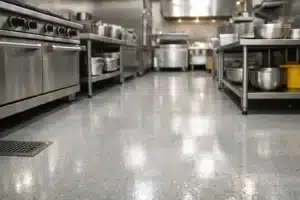
Inside commercial or industrial spaces, epoxy, polyaspartic and MMA systems are often applied over concrete floors. These are designed for hard-wearing performance, hygiene, chemical resistance or fast return to service. Again, success comes down to the condition of the slab and the preparation work carried out before installation.
Preparation is where the job is won or lost
If you want an honest answer to can resin go over concrete, the real answer is yes – if the prep is done properly. This is not the part to cut corners on.
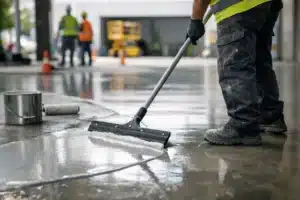
Concrete typically needs mechanical preparation to create the right profile for adhesion. That may involve grinding, shot blasting or scarifying, depending on the system and the condition of the surface. Cleaning alone is rarely enough.
Cracks may need repair, weak sections may need removal, and holes or surface defects may need patching with compatible materials. Primers may also be required to improve bond and manage porosity. On some projects, levelling work is needed before the resin system can go down.
This stage is exactly why specialist installers get better long-term results than general trades trying to add resin as a side offering. Resin is a specialist surface system, and concrete preparation is a big part of that expertise.
The benefits of laying resin over concrete
When the base is suitable, resin over concrete can be an excellent upgrade. Visually, it gives a much cleaner and more modern finish than plain concrete. That matters on driveways and patios where first impressions count, but it also matters in commercial settings where flooring needs to look professional as well as perform.
There is a practical gain too. Resin surfaces are low maintenance, easy to wash down and less likely to look tired after a short period. Decorative resin systems also offer more flexibility in colour, aggregate blend, borders and pattern detail than standard concrete ever will.
From a project point of view, retaining an existing concrete base can also reduce excavation and speed up installation. That makes it attractive for property owners who want transformation without unnecessary upheaval.
The trade-offs to be aware of
There is no one-size-fits-all answer here. Resin over concrete can work brilliantly, but the result depends on what sits underneath. If you already have drainage issues, movement, or widespread cracking, resin does not remove those risks by itself.
Cost is another factor. Some clients assume overlaying concrete is always the cheaper route. Sometimes it is. Sometimes the repairs and preparation required make a new base the more sensible investment. A proper site assessment usually settles that question quickly.
You should also think about finish expectations. If you want a fully permeable resin bound surface for SuDS-friendly performance, the existing concrete base may not support that objective unless the build-up is designed accordingly. In that case, the best visual finish and the best technical finish may not be exactly the same thing.
Can resin go over concrete for driveways and patios?
Yes, very often it can, and these are some of the most common applications. A sound concrete driveway can provide a stable platform for a resin finish that lifts kerb appeal and delivers a cleaner, more contemporary look. The same applies to patios, garden paths and courtyards where old concrete has become stained, patchy or dated.
The key difference outdoors is exposure. Weather, freeze-thaw cycles, standing water and vehicle use all put pressure on the surface. That is why the condition of the slab, the detailing around edges, and the quality of installation all matter so much. A driveway resin system needs more than a nice finish – it needs proper structural support.
For clients across Belfast and Northern Ireland, that local climate makes base assessment even more important. Rainfall, temperature changes and general wear can all expose weaknesses in old concrete faster than you might expect.
What a professional assessment should tell you
Before any resin goes down, you should know whether the concrete is strong enough, dry enough and level enough for the system you want. You should also know whether any cracks are cosmetic or structural, whether drainage needs correction, and whether local repairs are enough or full replacement makes more sense.
A reputable specialist will not promise resin over every existing slab just to win the job. They will tell you plainly if the concrete is suitable, what preparation is required, and where the risks sit. That protects the finish, the investment and the long-term performance of the surface.
At Surface King, that is exactly how quality resin projects are approached – by starting with the base, not just the colour sample.
If your concrete is sound, resin can be one of the smartest ways to upgrade it. If it is not, the right answer is to fix the foundation first, because a surface only lasts when the structure beneath it is ready for the job.