A driveway that always looks untidy is rarely a cleaning problem. More often, it is the wrong surface. Weeds push through joints, loose stones migrate, puddles sit where they should not, and before long the area starts dragging down the whole property. That is why more homeowners and commercial clients are comparing low maintenance surfacing options before they commit to a new finish.
The right surface should do more than cover the ground. It should improve kerb appeal, stay presentable with minimal effort, and cope with daily use without becoming a constant repair job. For patios, paths, courtyards and commercial areas, that usually means looking closely at how the surface is built, how easy it is to clean, and how well it holds its appearance over time.
What makes a surface genuinely low maintenance?
Low maintenance does not mean no maintenance at all. Every outdoor surface benefits from occasional sweeping, washing and basic care. The difference is how often you need to intervene and how quickly the surface starts to look tired when you do not.
A genuinely low maintenance finish resists weed growth, limits staining, stays structurally stable and does not shed material across the surrounding area. It should also be straightforward to clean without specialist treatment. If a surface needs regular re-levelling, frequent weed removal or patching every year, it is not low maintenance in any practical sense.
The base matters just as much as the top layer. Even the best-looking finish will struggle if it is laid over a poor foundation. Movement, cracking and drainage issues often start below the surface, which is why a proper installation process is essential if you want long-term performance rather than a short-lived visual upgrade.
Low maintenance surfacing options for homes and businesses
There is no single best answer for every property. The right choice depends on traffic, appearance, drainage, budget and the finish you want to achieve. Still, some surfaces consistently perform better than others when low upkeep is the priority.
Resin bound surfacing
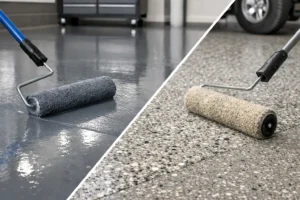
Resin bound surfacing is one of the strongest all-round choices for homeowners who want a smart, decorative finish without the constant upkeep associated with traditional paving or gravel. The system combines aggregate with resin to create a smooth, permeable surface that is attractive, durable and easy to keep clean.
For driveways, patios and pathways, resin bound stands out because it does not have loose stone shifting underfoot and it does not rely on multiple joints where weeds can establish themselves. A simple sweep and occasional wash are usually enough to keep it looking sharp. It also offers strong design flexibility, with a wide range of stone blends, border options and patterns available.
That said, quality is everything. A resin bound surface should be installed properly over a suitable base if you want it to remain stable and visually consistent. When done well, it gives you one of the best combinations of appearance, drainage and low ongoing maintenance.
Resin bonded surfacing
Resin bonded surfacing delivers a different look and feel. Aggregate is scattered onto a resin-coated base, creating a textured finish with strong visual appeal and good grip underfoot. It is often used where a natural stone appearance is wanted with a more traditional texture.
Maintenance is still relatively low compared with older hard landscaping methods, but it is not identical to resin bound. Because the stone sits on top rather than being fully bound throughout the layer, some aggregate loss can happen over time depending on traffic levels and the environment. For the right application, though, it remains a practical and attractive option.
Tarmac
Tarmac has long been a reliable choice for driveways and access areas because it is durable, straightforward and cost-effective. It handles vehicle traffic well and gives a clean, functional finish. In terms of day-to-day maintenance, it is generally easier to live with than block paving or gravel.
Its limitations are mostly visual. Tarmac is practical rather than bespoke, and while it can look neat and professional, it does not offer the same decorative impact as resin. It can also soften in extreme heat and may need occasional repairs as it ages. For clients who want a strong working surface with minimal fuss, it still has a place.
Concrete
Concrete is another surface that can deliver low upkeep, especially in commercial or utility-focused settings. It is tough, stable and capable of taking heavy use. If installed and finished properly, it can serve for years with only basic cleaning and occasional sealing, depending on the application.
The trade-off is appearance and the risk of cracking. Plain concrete can feel quite harsh in a domestic setting, and once cracks develop they can be difficult to disguise. Decorative concrete improves the look, but if visual transformation is high on your list, resin systems usually offer a more refined finish.
Block paving
Block paving remains popular, but it is not the first choice if your goal is minimal maintenance. It offers strong visual appeal at the outset and allows for different laying patterns and colours, yet the joints are the weak point. Weed growth, moss build-up and movement can all become recurring issues, especially in shaded or damp areas.
This does not mean block paving is a poor product. It simply means it requires more ongoing attention than many clients expect. If you want a surface that stays cleaner and more stable with less effort, there are usually better alternatives.
Loose gravel
Gravel is affordable and quick to install, and some properties suit its look. It can also help with drainage. But when clients ask for a genuinely low maintenance option, gravel rarely tops the list.
Loose stone travels, thins out in high-traffic areas and often ends up where it should not be. Weed growth is another common complaint. It may work for rural or informal settings, but for a polished finish with easier upkeep, bound systems are in a different league.
Why resin often comes out on top
When clients want a surface that combines performance with visual impact, resin usually becomes the front-runner. That is because it solves several common problems at once. It removes the loose, untidy feel of gravel, avoids the joint-related maintenance of block paving, and delivers a more tailored finish than plain tarmac or concrete.
For domestic properties, that means a driveway or patio that actively improves the look of the home instead of simply serving a function. For commercial spaces, it means a professional surface that is easy to keep presentable and suitable for customer-facing environments.
There is also the flexibility factor. Resin systems can be specified to suit contemporary homes, traditional properties, hospitality spaces, retail settings and commercial entrances. Colour blends, edging and layout details make a real difference, particularly where the goal is not just to replace an old surface but to transform the whole area.
Choosing the right option for your property
The best surface depends on how the area is used. A family driveway in Belfast has different demands from a courtyard outside a hospitality venue or a resin floor in a busy industrial setting. Traffic levels, drainage requirements, existing ground conditions and the finish you want all matter.
If appearance is as important as practicality, resin bound tends to offer the strongest balance. If cost is the main driver and the area is heavily vehicle-focused, tarmac may be suitable. If you are upgrading a decorative path or entrance and want texture underfoot, resin bonded could be the better fit. What matters is choosing a system that suits the job rather than defaulting to what has always been there.
It is also worth thinking beyond installation day. A cheaper surface that needs regular attention can cost more in frustration and repairs over time. A properly specified, professionally installed finish often delivers better value because it keeps its shape, keeps its appearance and asks less of you year after year.
Installation quality decides the outcome
Even the best low maintenance surfacing options can disappoint if the groundwork is poor or the materials are not suited to the site. Drainage issues, weak bases and rushed preparation all show up later. That is when surfaces start cracking, holding water or losing their finish before they should.
That is why specialist advice matters. A contractor who understands resin systems, base preparation and long-term performance can recommend the right build-up for the space rather than pushing a one-size-fits-all answer. For homeowners and commercial clients alike, that expertise is what turns a surface upgrade into a lasting improvement.
At Surface King, that specialist approach is central to every project. Whether the goal is a decorative resin bound driveway, a hard-wearing patio, or a commercial flooring system with minimal downtime, the focus is always the same – a high-quality finish that looks the part and performs properly.
If you are weighing up surfacing choices, think about the finish you want to live with in three or five years, not just the one that looks acceptable on day one. The right surface should make the space easier to own, easier to clean and far better to look at.