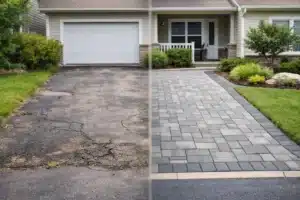
A loose gravel driveway can look smart on the day it is laid. A few months of tyres, foot traffic, heavy rain and Northern Ireland weather can tell a different story. When weighing up resin bound versus gravel, the real decision is not simply about the initial look. It is about how you want the surface to perform, how much maintenance you are prepared to take on, and the standard of finish you expect outside your property.
For homeowners, landlords and commercial sites, both options have their place. Gravel remains a familiar, budget-conscious choice for large areas and rural settings. Resin bound surfacing provides a more refined, fixed finish with greater design control. The right answer depends on the existing base, the use of the space and the result you want to see every time you arrive home or welcome customers.
Resin bound versus gravel at a glance
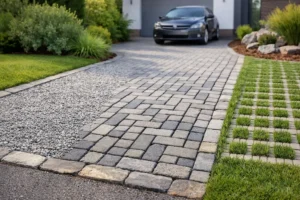
Gravel is made up of loose aggregate spread across a prepared base. It is quick to install in straightforward situations, and its natural texture suits some traditional properties. However, the stones move under wheels and feet. Without proper edging and regular attention, gravel can migrate onto pavements, collect at gate entrances and form thin patches where vehicles repeatedly turn.
Resin bound surfacing combines kiln-dried decorative aggregate with a clear UV-stable resin. The materials are mixed together before being hand trowelled onto a suitable base, creating a smooth, stone-rich surface with each aggregate held in position. It retains the natural appearance of stone but removes the loose, shifting quality associated with a conventional gravel drive.
The difference becomes particularly clear on driveways, slopes, pathways and courtyards. A resin bound surface stays even and comfortable underfoot, while gravel can become rutted, uneven or difficult to walk across in heels, pushchairs or wheelchairs.
Kerb appeal and design freedom
Gravel offers a limited but attractive palette of stone sizes and colours. It can complement country homes, period properties and informal gardens, especially when contained with strong kerbs or edging. Yet its appearance changes as dust, leaves and displaced stones build up. The finish can quickly look untidy around parked cars, drains and entranceways.
Resin bound creates a sharper visual transformation. There is a wide choice of aggregate blends, from warm golden tones to contemporary silvers, charcoals and mixed natural finishes. Borders can frame a driveway, a contrasting blend can define a path, and carefully planned patterns can bring character to a patio or courtyard without relying on individual paving joints.
This is where specialist installation matters. The blend, aggregate size, borders and layout should suit the property rather than follow a one-size-fits-all formula. A well-designed resin surface can lift the frontage of a home and create a more considered arrival area for a hotel, retail unit or managed development.
Drainage: the important distinction
Many people choose gravel because rainwater can pass through the gaps between the stones. That is useful, but drainage can reduce as fines, soil and organic debris settle into the surface. Compaction from vehicles may also affect how freely water moves through the layers below.
A correctly specified resin bound system is naturally porous. Water drains through the gaps between the bonded stones and into a suitable permeable base, helping to avoid standing water on the finished surface. This makes it a strong option for paths, patios and driveways where surface water management is a concern.
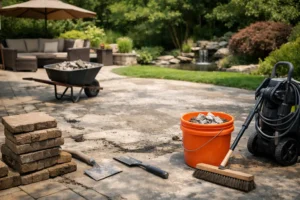
The base is crucial. Resin bound is not a remedy for an unstable or poorly draining sub-base. In some projects, an existing tarmac base can be repaired and prepared for an overlay. In others, the ground needs excavation and a new permeable construction. A professional survey should establish this before the surface is chosen, not after materials arrive on site.
Gravel can also work well over a properly designed permeable base, particularly where a large rural drive needs a practical finish. The difference is that the top layer remains loose and will need periodic levelling and topping up.
Maintenance and everyday cleanliness
Gravel asks for regular housekeeping. Stones need raking back into place, weeds need treating or removing, and displaced aggregate often ends up in the road, garage or house. A gravel driveway may also need fresh stone added after a period of use, especially near turning circles and steep approaches.
Resin bound surfaces are low maintenance rather than maintenance-free. Routine sweeping keeps leaves, soil and debris from building up, while an occasional gentle clean helps preserve the colour and texture of the aggregate. Because the stones are fixed, there is no need to rake the surface after parking or sweep loose chippings from the pavement.
For landlords and facilities managers, that difference can be valuable. A clean, stable entrance is easier to present to tenants, visitors and customers. It also reduces the chance of loose stones being carried indoors or scattered across an adjoining tarmac area.
Durability under vehicles and foot traffic
Gravel copes with vehicle use when it is installed over a sound sub-base and maintained properly. But repeated braking, turning and reversing naturally displace the stone. On a slope, loose aggregate can travel downhill. At busy entrances, it may require more frequent attention than owners first expect.
Resin bound is designed to provide a durable, bonded wearing surface. It is well suited to domestic driveways, pedestrian routes and many commercial exterior areas when the base and resin system are specified for the anticipated traffic. The surface should be laid at the correct depth, using quality UV-stable resin and clean, dry aggregate. Shortcuts in preparation or mixing can compromise both appearance and long-term performance.
It is also worth separating resin bound from resin bonded. Resin bonded finishes have aggregate scattered onto a resin layer and can offer a more textured look, but they are not the same fully bound system. For a smooth, permeable decorative driveway finish, resin bound is usually the option people mean.
Cost: initial spend versus long-term value
Gravel usually has the lower initial cost, especially if the site already has a usable base and the area is large. It may be the sensible choice for a long private lane, a temporary surface or a setting where a deliberately informal look is preferred.
Resin bound involves a higher upfront investment. Preparation, base repairs, drainage requirements, edging, materials and skilled installation all influence the final price. It should not be compared only by cost per square metre. The quality of the groundwork and specification will affect whether the surface performs as intended.
Over time, the value calculation changes. A resin bound driveway can reduce the ongoing work associated with loose stone and deliver a more polished, permanent appearance. For properties where kerb appeal influences lettings, saleability or customer perception, that visual return can matter as much as the maintenance saving.
When gravel is still the better choice
Resin bound is not automatically the right answer for every project. Gravel can be the better fit where the budget is tight, the area is very large, or the property calls for a rustic, loose-stone character. It is also easy to refresh in sections, provided the base remains stable and the owner is comfortable with regular upkeep.
Choose gravel with realistic expectations. Install effective edging, use an appropriate grid or stabilisation system where needed, and allow for occasional raking, weed control and replacement aggregate. A poorly contained gravel surface rarely stays neat by itself.
When resin bound is the stronger investment
Resin bound is particularly effective when you want a clean, durable and design-led finish for a driveway, patio, path or courtyard. It is a strong choice for households tired of stones collecting at the door, landlords upgrading external areas between tenancies, and businesses that need an entrance to look professional every day.
It also suits projects where one specialist team can assess the base, advise on drainage, create the design and complete the installation. Surface King delivers resin bound systems across Belfast and Northern Ireland with the focus where it belongs: a properly prepared foundation and a finished surface that looks as good as it performs.
Before making a decision, look beyond the sample stone. Walk the site after rain, consider how vehicles turn and park, think about who uses the space, and decide how much time you want to spend maintaining it. The best surface is the one that continues to suit your property long after the installation day has passed.