A production floor cannot always wait until the weekend for repairs. A retail unit cannot afford to stay closed while a coating cures. That is where the choice between MMA versus polyurethane flooring becomes more than a technical detail. Both are high-performance resin systems, but they solve different problems and create distinctly different finished floors.
For facilities managers, business owners and contractors across Northern Ireland, the right decision usually comes down to downtime, operating conditions, expected traffic and the look required. A floor that performs brilliantly in a chilled food area may not be the best choice for a showroom, warehouse office or hospitality space.
MMA versus polyurethane flooring at a glance
MMA, short for methyl methacrylate, is best known for speed. It can cure in very low temperatures and often return to service within hours rather than days. Polyurethane flooring is valued for its flexibility, comfort underfoot, chemical resistance and ability to cope with movement in the substrate.
Neither option is automatically superior. MMA is often the practical answer where closure time is the biggest cost. Polyurethane can be the stronger long-term choice where thermal shock, vibration, foot comfort or a slightly more forgiving finish matter most.
The key is to specify the complete system, not simply choose a resin name. Floor preparation, moisture levels, primer selection, slip resistance, thickness and topcoat all influence how the surface performs.
When MMA flooring is the right investment
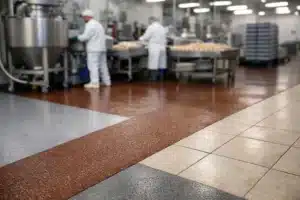
MMA resin flooring is a fast-curing system with a strong reputation in commercial and industrial environments where every hour of downtime matters. It is commonly used in food production areas, commercial kitchens, retail premises, hospitals, workshops, cold stores and logistics spaces.
Rapid return to service
The major advantage of MMA is its curing speed. Depending on the system, conditions and installation programme, an MMA floor can be ready for foot traffic in as little as one to two hours, with heavier traffic following shortly after. That gives businesses a realistic route to completing work overnight, during a planned shutdown or between trading periods.
This is particularly valuable for premises that operate long hours or cannot easily move staff, stock or machinery elsewhere. A conventional floor coating may be less expensive at the outset, but the operational cost of several days out of action can quickly outweigh that saving.
Reliable performance in cold conditions
Many resin systems become difficult to install or slow to cure in low temperatures. MMA is different. It can be applied in colder environments, making it highly suitable for refrigerated areas, loading spaces and sites that are difficult to heat during works.
That does not remove the need for professional assessment. The substrate must still be sound, clean and prepared correctly. However, MMA gives installers more flexibility where conditions are challenging and the programme is tight.
Durable, hygienic and repairable
A properly specified MMA system creates a hard-wearing, non-porous surface that is easy to clean and can be finished with the required level of slip resistance. It is well suited to areas exposed to regular washdowns, wheeled traffic, spillages and demanding cleaning regimes.
MMA can also be repaired and blended effectively when damage occurs. That is useful in busy working environments, where a localised repair is preferable to replacing a complete floor section. Available colours, decorative flakes and line-marking options mean the finish does not have to look purely industrial either.
The trade-off with MMA
MMA has a noticeable odour during installation. Specialist ventilation, careful programming and experienced application are essential, especially in occupied buildings or enclosed spaces. The odour fades as the system cures, but it must be considered at the planning stage.
MMA floors are also very hard. That is ideal for many industrial settings, but less attractive where staff stand for long periods or where a slightly softer, more flexible surface would improve comfort and reduce the effect of constant vibration.
Where polyurethane flooring performs best
Polyurethane, often called PU flooring, is a more flexible resin system. It is widely used in manufacturing, food and drink production, commercial kitchens, healthcare, education, retail and areas with varying temperatures or frequent movement.
Flexibility for demanding substrates
Concrete moves. It expands and contracts with temperature changes, and it can experience minor movement over time. Polyurethane has more elasticity than MMA and epoxy, allowing it to accommodate a degree of substrate movement without cracking as readily.
This makes PU a strong option in areas exposed to heat, cold, thermal cycling and mechanical activity. For example, a busy food processing floor may experience hot-water washdowns, cold storage conditions and constant wheeled traffic. A polyurethane system can handle this combination well when specified at the correct thickness.
Better comfort and impact resistance
Polyurethane flooring generally feels less brittle underfoot than a harder resin coating. While it is still a commercial-grade surface, that added flexibility can make a difference in workplaces where people stand, walk and work for long shifts.
It also offers good resistance to impact and abrasion. This makes it suitable for workshops, production zones and back-of-house spaces where dropped tools, trolleys and repeated use are part of normal daily operation.
A cleaner, more tailored finish
PU flooring can be supplied in a range of colours and finishes, from practical anti-slip textures to smoother decorative surfaces. It is often chosen for environments that need a hygienic, professional look without sacrificing performance.
The finished surface can support colour zoning, safety lines, walkways and designated work areas. For customer-facing premises, the right colour scheme can help turn a tired concrete floor into a cleaner, more considered part of the interior.
The trade-off with polyurethane
Polyurethane usually takes longer to cure than MMA. Installation programmes need more planning, and the floor may need to remain clear for a longer period before it can carry normal traffic. Temperature and humidity can also affect application and curing times.
That does not make PU a poor choice for fast-paced projects. It simply means the works need to be scheduled properly. If a site has a planned closure or can isolate an area in phases, the benefits of a polyurethane system may outweigh the extra cure time.
Choose by site conditions, not resin labels
The most reliable way to choose between MMA and polyurethane is to start with the environment. Ask what the floor will face every day, rather than focusing only on its initial appearance.
An MMA system is often the leading choice if your priority is rapid installation, cold-temperature application and an exceptionally quick return to service. It works particularly well for retail refits, healthcare facilities, food areas, cold stores and industrial sites with limited shutdown windows.
A polyurethane system is often the better fit where the floor needs to absorb movement, tolerate repeated temperature changes and provide greater comfort underfoot. It is a proven option for production floors, commercial kitchens, manufacturing areas and facilities with intensive washdown routines.
Chemical exposure also matters. Oils, cleaning products, acids, solvents and food by-products can affect resin floors differently. A specialist survey should identify what is likely to be spilled, how often the floor is cleaned and whether the surface will be exposed to high temperatures. The answer may be a standard MMA or PU system, but it may also point to a specialist polyurethane concrete or a combined resin build-up.
Preparation decides whether the floor lasts
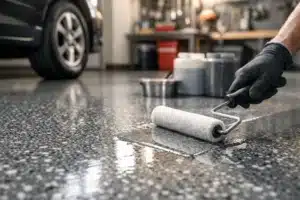
Even the best resin material will fail if it is installed over a weak, contaminated or damp substrate. Before installation, the concrete should be assessed for cracks, laitance, moisture, previous coatings and any signs of movement. Mechanical preparation, such as diamond grinding or shot blasting, gives the resin the profile it needs to bond correctly.
Cracks and damaged areas should be repaired, while falls and drainage need attention in wet-process environments. Water that sits on a floor creates a cleaning and slip risk regardless of how good the coating is. In some sites, installing coving at wall junctions is also worthwhile because it removes difficult-to-clean edges and supports a more hygienic finish.
This is why a low headline price can be misleading. A quality resin floor is a complete surface system, installed to suit the building and the way it operates.
Get the finish right for your operation
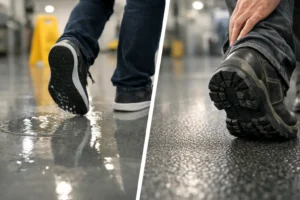
Gloss level, colour and texture are not cosmetic extras. A pale floor can brighten a workspace and make contamination easier to spot. A textured anti-slip finish can improve safety in wet zones, although excessive texture may make cleaning more demanding. Darker finishes can disguise marks in high-traffic areas, while coloured walkways can organise movement through a busy site.
Surface King helps clients assess these practical details alongside cure time and durability, creating commercial resin flooring that works hard and presents the right image. The strongest result is not the fastest or toughest floor on paper. It is the one designed around your site, your programme and the people who use it every day.
Before choosing MMA or polyurethane, walk the space with a specialist and be clear about what cannot go wrong. Whether that is downtime, safety, hygiene, appearance or long-term maintenance, the right resin system should make the daily operation easier from the moment it is handed back.