A food production floor is exposed to far more than foot traffic. It may face hot washdowns at the end of every shift, oils and acids from ingredients, dropped utensils, pallet trucks, standing water and demanding hygiene routines. Choosing the best flooring for food production is therefore not a decorative decision. It is a critical investment in food safety, staff safety, operational uptime and the long-term condition of the facility.
For most food and drink environments, a professionally installed resin floor system provides the strongest all-round answer. The right specification will be seamless, non-porous, hard-wearing and easy to clean, while also providing the right slip resistance and drainage detail for the work taking place. However, there is no single resin system that suits every bakery, dairy, commercial kitchen or processing line. The best result comes from matching the floor to the actual conditions on site.
What the best flooring for food production must deliver
A floor in a food environment has to support a clean, controlled workplace every day. Grout lines, cracked concrete and worn vinyl are difficult to maintain because they can trap moisture, dirt and bacteria. Once the surface begins to fail, cleaning takes longer and the risk of contamination rises.
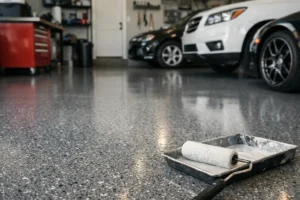
A high-quality resin flooring system creates a continuous finish with no joints for debris to collect in. It can be taken up walls as a coved skirting, removing the awkward corner where floors and walls meet. This makes washdown easier and gives cleaners a surface they can properly reach.
The floor also needs to cope with the chemicals used to clean it. Degreasers, sanitisers, food acids and alkaline cleaning agents can quickly damage unsuitable coatings. In wet production areas, slip resistance is equally vital. A glossy floor may look clean, but it is not the right choice if water, oil or food residues make it hazardous underfoot.
The key requirements are straightforward: hygienic performance, chemical resistance, impact resistance, slip control and a finish that remains easy to clean. Add thermal resistance where hot water, steam or chilled conditions are part of the process.
Resin flooring systems for food facilities
Polyurethane cement for demanding wet processing
Polyurethane cement, often called PU cement, is widely considered one of the strongest options for heavy-duty food production. It is designed for areas exposed to frequent washdowns, high temperatures, thermal shock and aggressive chemicals. That makes it particularly suitable for dairies, breweries, meat and poultry processing, fish plants, commercial bakeries and industrial kitchens.
Its greatest advantage is its ability to cope with sudden temperature changes. If a floor is regularly hit with hot water or steam and then exposed to a cooler environment, some systems can crack or lose adhesion over time. PU cement is built for these tougher conditions, provided the substrate preparation and drainage details are right.
It is not always the most economical choice for a light-duty packing room or dry storage area. Where the conditions do not demand its performance level, another resin system may offer better value. But in harsh wet-processing zones, it is often the standard to measure other floors against.
Epoxy resin for clean, dry and medium-duty areas
Epoxy flooring remains an excellent choice for many food-related spaces. It creates a smooth, durable and non-porous surface that is easy to clean, with a wide range of colours and slip-resistant textures available. It works well in dry production areas, packing rooms, ingredient stores, corridors, staff areas and light-to-medium-duty kitchens.
An epoxy system can also help improve the appearance of an older facility. Clear zones, coloured walkways and safety markings can be incorporated into the floor, helping separate pedestrian routes from equipment and working areas. This gives the site a cleaner, more organised finish without relying on painted lines that quickly wear away.
The trade-off is temperature. Standard epoxy is not the first choice for regular high-temperature washdowns or severe thermal movement. In these environments, a specialist PU cement system will usually provide a more reliable long-term finish.
MMA resin when downtime must be kept low
MMA, or methyl methacrylate resin, is known for rapid curing. In the right conditions, it can be installed and returned to service far faster than conventional resin systems. This makes it a practical option for food businesses that cannot afford to close an area for several days.
For a production facility working around tight schedules, a rapid-curing floor can make the difference between completing essential works over a planned shutdown and disrupting trade. MMA also offers good chemical resistance and can be specified with anti-slip aggregates for wet areas.
The installation process requires experienced contractors and proper ventilation management because the material has a distinct odour while it is being applied. It is a specialist solution, not a shortcut. When programmed properly, though, it offers impressive performance with minimal downtime.
Polyaspartic systems for fast, attractive upgrades
Polyaspartic resin systems cure quickly and can provide a hard-wearing, attractive finish for suitable commercial spaces. They are often a good fit for dry food preparation areas, retail-facing food spaces, storerooms and back-of-house areas where appearance matters alongside durability.
Like epoxy, polyaspartic flooring should be selected according to the operating conditions rather than chosen simply because it cures quickly. Heavy wet processing, sustained heat and thermal shock require a more specialised specification.
Get drainage, falls and slip resistance right
Even the best resin floor will underperform if water cannot escape. Food production areas often need carefully formed falls leading to gullies or drainage channels, preventing standing water from becoming a hygiene and slip hazard. The floor finish, drainage layout and cleaning regime must work together.
Slip resistance should be tailored to the task. A dry packing room may need only a light texture that remains easy to mop. A washdown area handling oils, fats or wet ingredients may need a more pronounced anti-slip aggregate. Excessive texture can make cleaning harder, so the goal is not the roughest possible floor. It is the right level of grip for the real contamination risk.
Coving deserves the same attention. Resin coved skirtings create a smooth transition from floor to wall, eliminating sharp corners and exposed edges that are difficult to sanitise. In controlled food environments, this small detail makes a significant difference to cleanability and the overall professional finish.
Preparation determines the life of the floor
Resin flooring is only as reliable as the surface beneath it. Existing concrete must be assessed for moisture, cracks, contamination, weak areas and previous coatings. Mechanical preparation, usually through grinding or shot blasting, creates the clean, sound profile needed for the resin to bond correctly.
This is also the stage to repair damaged concrete, address uneven levels and plan transitions at doors, drains and machinery bases. Applying a new coating over a failing substrate may look acceptable for a short period, but it does not solve the underlying problem. Premature lifting, cracking or debonding is often a preparation failure rather than a failure of the resin itself.
A specialist survey should establish how the room is used, what cleaning products are present, whether hot washdowns occur, the type of traffic on the floor and how much closure time is available. That information leads to a specification that performs, rather than a generic coating chosen from a brochure.
Choose a floor that supports your operation
The best flooring for food production is usually a resin system, but the exact choice depends on the environment. PU cement is the leading option for punishing wet and thermal conditions. Epoxy provides a hygienic, durable solution for many dry and medium-duty spaces. MMA and polyaspartic systems are valuable where fast return to service is a priority.
Surface King helps commercial clients across Northern Ireland identify the right industrial resin floor for their site, from substrate preparation and drainage details to hard-wearing finishes designed around hygiene and operational demands. A properly specified floor does more than make a facility look cleaner. It gives your team a safer, easier-to-maintain surface that is built to keep production moving.