A driveway should not turn into a shallow pond after a Belfast downpour. Resin permeability is one of the main reasons homeowners, landlords and commercial property owners choose a resin-bound finish over tired concrete, cracked tarmac or loose stone. When the correct system is specified and installed on a suitable base, rainwater can pass through the decorative surface instead of sitting on top of it.
That result is not automatic. The appearance of a resin surface may be the first thing people notice, but drainage performance depends on the whole construction – aggregate, resin, depth, base preparation and the way water is managed around the property. Get those details right and the finished area can look exceptional while remaining clean, practical and built for Northern Ireland weather.
What does resin permeability mean?
A permeable surface allows water to travel through it rather than forcing it to run across the top. With a resin-bound system, carefully graded decorative aggregate is fully coated in UV-stable resin and laid as one continuous layer. Small voids remain between the stones, creating channels for water to drain through.
This is very different from an impermeable slab, dense concrete or conventional asphalt surface, where water must flow towards gullies, channels or the edge of the driveway. On a properly designed resin-bound driveway, water moves through the aggregate layer and into a permeable base beneath, where it can drain naturally into the ground or through an appropriate drainage build-up.
The benefit is visible after rain. Rather than puddles collecting in low spots, the surface can dry more quickly and remain more comfortable to walk across. It also reduces loose grit and mud being carried into the house, which matters for busy entrances, patios and paths.
Resin-bound and resin-bonded surfaces are not the same
The terms are often used interchangeably, but they deliver different results. If drainage is a priority, this distinction matters.
A resin-bound surface combines dried aggregate and resin in a forced-action mixer before installation. Every stone is coated, then hand trowelled to form a smooth, durable and porous finish. This is the system normally chosen for permeable driveways, pathways, patios and courtyards.
A resin-bonded surface is made by applying resin to a prepared base and scattering loose aggregate onto it. It has a more textured, natural-stone appearance and can offer excellent grip, but it is not generally a permeable finish. Water will be directed across the surface, so the underlying drainage arrangement must handle it.
Neither option is universally better. Resin-bound is the stronger choice where a smooth decorative finish and surface drainage are required. Resin-bonded can suit projects where texture, grip and a traditional loose-stone look are the main priorities. The right recommendation starts with how the area will be used, not simply the colour of the stone.
Why resin permeability depends on the full system
The decorative resin layer is only one part of the drainage story. A high-quality installation is built as a system, and a failure below the surface can prevent even the best aggregate blend from performing as intended.
First, the aggregate must be suitable for resin-bound application. Correctly graded, kiln-dried stone creates stable voids between particles. Using damp aggregate, poor grading or an incorrect resin ratio can close those voids, weaken the finish or leave an inconsistent appearance.
Second, the base must be structurally sound and permeable where a fully permeable construction is required. Open-textured asphalt bases are commonly used because they provide strength while allowing water to pass through. A compacted stone sub-base designed for drainage then manages water below. The exact specification depends on ground conditions, existing levels, expected vehicle loading and where water will ultimately go.
Third, the surface needs the right depth. A pedestrian pathway and a driveway used by cars face different demands. Installing too thinly may compromise strength and long-term appearance. Installing correctly to the required depth provides the stable, even finish that makes resin surfacing such a strong visual upgrade.
Finally, falls, thresholds and drainage edges still need careful planning. Permeable does not mean water can be ignored. Rainwater must not be directed towards a building, neighbouring land or areas where the ground cannot accept it. A professional survey identifies these issues before work begins, rather than trying to disguise them once the resin has been laid.
The practical benefits for homes and commercial sites
For homeowners, a permeable resin-bound driveway can improve kerb appeal without creating another maintenance-heavy surface. The finish is available in a wide range of natural aggregate colours, with options for contrasting borders, curves and feature patterns. It can turn a worn entrance into a defined, polished part of the property while retaining practical drainage performance.
For landlords and hospitality venues, a cleaner-draining entrance can make a strong first impression. Water that clears efficiently is less likely to leave standing puddles at doors, although no exterior surface should be treated as completely slip-proof in every weather condition. Texture, gradient, footwear, frost and contamination all affect underfoot safety.
Commercial environments may have more demanding requirements. Retail forecourts, healthcare settings, courtyards and pedestrian routes can benefit from attractive, easy-to-clean resin-bound finishes, while industrial areas may need alternative resin systems such as epoxy, MMA or polyaspartic coatings. Those high-performance flooring systems are designed around chemical resistance, rapid curing or heavy wear, rather than permeability. Matching the material to the application is what protects the investment.
Common issues that reduce drainage performance
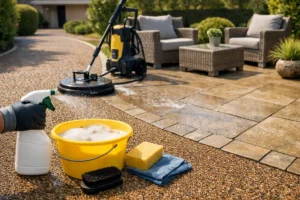
A resin-bound finish can lose permeability when the pores between the aggregate become blocked. In Northern Ireland, leaves, soil, moss, road grit and organic debris are common culprits, particularly beneath trees or beside planted borders. Regular sweeping and occasional gentle cleaning help keep the surface open.
Pressure washing needs care. An overly aggressive jet held close to the surface can damage the resin bond or dislodge aggregate. Use a controlled cleaning method and seek specialist advice if staining, algae or an oil spill requires treatment. Harsh chemicals are not a shortcut to better aftercare and may affect the resin or surrounding planting.
Poor installation is another avoidable problem. Laying resin-bound material over an unsuitable solid base without resolving drainage beneath it can leave water with nowhere to go. The top layer may be porous, but the system is not truly permeable if water meets an impermeable barrier below. This is why surface preparation should never be treated as an optional extra.
Choosing the right approach for your property
The best resin surface begins with an honest assessment of the site. Is the existing base stable? Does the ground drain freely? Will cars, vans or delivery vehicles use the area? Are there drainage channels, damp-proof course levels, tree roots or access restrictions to consider? These details shape the recommendation.
For many domestic projects, a resin-bound driveway over a correctly prepared permeable base offers the balance of style, durability and drainage that traditional paving struggles to match. For an existing sound base where water can be directed to suitable drainage, a different build-up may be appropriate. There is no value in promising a permeable result where the site conditions do not support one.
Surface King advises, supplies and installs specialist resin systems with the focus on both finished appearance and long-term surface performance. A free consultation is the opportunity to discuss aggregate colours, borders, base requirements and the drainage solution that suits your property.
A beautiful driveway should do more than look sharp on installation day. Ask how water will move through the surface, where it will go next and how the base will support it for years to come. Those three questions lead to a finish that stays as practical as it is impressive.