A driveway has to handle far more than first impressions in Northern Ireland. It deals with wet tyres, regular rainfall, frost, turning vehicles and the daily drag of bins, prams and foot traffic. The best decorative stone driveway finishes bring kerb appeal and practical performance together, giving a property a cleaner, more considered entrance without signing up to constant maintenance.
For many homeowners, the choice comes down to more than colour. The right finish depends on the condition of the existing base, how the driveway is used, the drainage requirements of the site and the level of detail you want in the finished design. A surface that looks excellent on installation day should still look smart after years of real use.
What makes a stone driveway finish work?
Stone is naturally varied, which is exactly why it creates a more premium look than plain concrete or ageing tarmac. Aggregates can be selected for tone, size and texture, from soft golden blends that suit traditional homes to crisp silvers and contemporary charcoal finishes.
Appearance alone is not enough. Loose or poorly fixed stone can migrate onto pavements, collect in tyre tracks and make routine sweeping a chore. A professional driveway finish needs a stable, correctly prepared base and a system suited to the property, rather than a one-size-fits-all approach.
The main options are loose gravel, resin bound stone, resin bonded stone and decorative stone detailing used alongside tarmac or paving. Each has a place, but they deliver a very different result.
Resin bound decorative stone driveway finishes
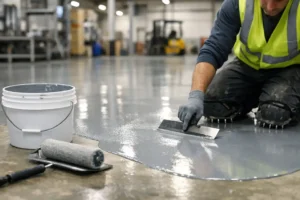
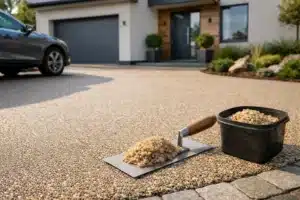
Resin bound surfacing is often the strongest all-round choice for homeowners who want a smooth, modern and low-maintenance driveway. Natural aggregate is mixed thoroughly with a clear UV-stable resin before being hand trowelled onto a suitable base. Every stone is coated and bonded in the mix, creating a level, attractive surface with no loose aggregate under normal use.
The key advantage is drainage. When installed over a correctly designed permeable base, a resin bound driveway allows water to pass through the surface rather than sit in puddles. That is particularly valuable for Belfast and wider Northern Ireland properties, where a driveway can spend much of the year dealing with rain.
A resin bound finish also gives greater freedom in the design. Homeowners can choose a single aggregate blend for a calm, uniform look, or introduce contrasting borders, curves, parking bays and feature panels. A dark outer edge can frame a lighter main field beautifully, while a warmer blend can soften the frontage of a period property.
It does require skilled installation. The base must be sound, clean and correctly profiled, and the resin-to-stone ratio needs to be accurate. Poor preparation or inadequate materials can lead to cracking, discolouration or loose patches. This is why a specialist installer matters more than simply finding the lowest quote.
Where resin bound is the right fit
Resin bound stone suits driveways where appearance, comfort underfoot and easy upkeep are priorities. It is also an excellent option for a continuous scheme that runs from driveway to paths, steps, patios and courtyards. The result feels designed as one exterior space rather than a collection of separate surfaces.
Like any surface system, it has limits. Existing concrete or tarmac that is badly cracked or moving may need remedial work before installation. Heavy commercial traffic and frequent turning by large vehicles also call for a more detailed assessment of the base and specification.
Resin bonded stone: texture and impact
Resin bonded surfacing is sometimes confused with resin bound, but it is a different system. Resin is applied to the prepared base, then loose aggregate is scattered over it. Once cured, the excess stone is removed, leaving a textured finish with the visual character of loose gravel but with stones fixed to the surface.
This finish can create a striking, traditional appearance and is useful where a high-grip texture is desirable. It can be a strong option for driveways, entrance areas and sloped sections, provided the substrate is stable and the drainage arrangement is appropriate.
Unlike resin bound surfacing, resin bonded stone is not generally permeable. Water runs across the finished surface, so falls and drainage must be planned carefully. It can also feel rougher underfoot and may shed occasional particles over time, especially in high-turning areas. That is not necessarily a problem, but it is a trade-off worth understanding before choosing a system.
Loose gravel: lower initial cost, higher upkeep
Loose gravel remains popular because it is familiar, attractive and usually less expensive to lay at the outset. It offers plenty of aggregate choice and the sound of vehicles arriving can provide an added sense of security.
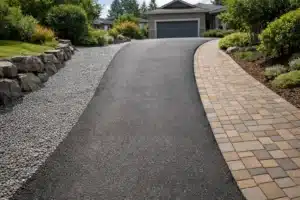
However, gravel needs containment. Without quality edging, a suitable sub-base and an appropriate grid or stabilisation system, stones travel. They are pushed into the road, carried into the house on shoes and displaced into low spots by tyres. Weeds can also become an issue when the layers below have not been properly constructed.
Gravel can work well on rural or long driveways where a relaxed, natural finish is part of the appeal. For compact urban driveways, busy family homes or properties seeking a sharp, clean frontage, a fixed decorative stone finish is often easier to live with.
Choosing the right aggregate colour and blend
A driveway should support the building rather than compete with it. The most successful aggregate selection usually picks up a colour already present in the brickwork, render, roof tiles, windows or boundary walls.
Warm gold, buff and brown blends complement red brick, sandstone and more traditional façades. Silver, black, white and graphite aggregates tend to suit contemporary render, anthracite frames and modern extensions. Multi-colour blends can be forgiving on a busy driveway because small marks and everyday dust are less noticeable than on a very pale or very dark single-colour finish.
It is worth viewing samples outside, not just indoors. Natural light changes throughout the day, and rain deepens the tones in stone. A sample that appears pale under showroom lighting may look substantially richer once installed across a large exterior area.
Borders and details that add value
Borders are not merely decorative. A contrasting edge gives the driveway definition, helps guide parking and creates a deliberate finish against walls, planting beds and paths. For wider frontages, a border can stop an expanse of stone from looking flat.
Curves, circles and geometric features can work well, but restraint usually creates the most enduring result. One strong border colour or a simple central feature tends to look more expensive than several competing patterns. The goal is a driveway that improves the property as a whole, not a surface that overwhelms it.
Base preparation decides the lifespan
The finish is what people see, but the base is what carries the driveway. A decorative stone system installed over a weak, uneven or unstable foundation will not perform as intended. Cracks in the existing surface, poor falls, soft ground and inadequate drainage need to be addressed before the visible work begins.
A proper survey should consider vehicle use, levels at the house and garage, water run-off, edging and connections to existing paths or gates. It should also establish whether the current tarmac or concrete can be retained as a suitable base, or whether excavation and replacement are the better long-term decision.
This preparation is where apparently similar quotes can differ significantly. A lower price may exclude repairs, drainage work, edging or the quality of resin and aggregate needed for a reliable finish. Comparing scope matters just as much as comparing the final figure.
Keeping a decorative stone driveway looking its best
A professionally installed resin surface is refreshingly straightforward to maintain. Regular sweeping removes leaves and grit, while a gentle wash helps lift surface dirt. Treat oil spills promptly, avoid harsh solvents and do not use aggressive pressure-washing at close range, as this can damage the finish.
Keeping nearby planting trimmed also helps. Soil, leaf mulch and moss hold moisture against any driveway surface, so simple seasonal care protects both appearance and slip resistance. If a driveway has drainage channels or gullies, keep them clear so water can leave the area as designed.
For homeowners who want a surface that looks refined without becoming another weekend job, that balance is a major part of the appeal.
A finish built around your property
The best decorative stone driveway is not chosen from a photograph alone. It is specified around the home, the base, the way vehicles use the space and the look you want to achieve. A well-planned resin bound design can turn a worn frontage into a clean, durable arrival point that remains practical through every season.
Surface King can assess the existing ground, recommend a suitable system and create a finish with the colours, borders and detailing that suit your property. The most useful next step is a proper consultation, because the right driveway should feel as reliable under your tyres as it looks from the kerb.