A crack through a resin driveway or floor is rarely just a cosmetic issue. It can be the first visible sign of movement beneath the surface, trapped moisture, poor drainage or an unsuitable original installation. Knowing how to repair cracked resin surfaces starts with identifying why the crack appeared. Fill the line without addressing its cause and it is likely to return – often wider and more noticeable than before.
For homeowners across Belfast and Northern Ireland, a well-installed resin bound surface should provide years of attractive, low-maintenance performance. For commercial premises, a damaged resin floor can also create a cleaning issue, allow moisture into the substrate and affect safe day-to-day use. The right repair protects the finish, but the right diagnosis protects the investment.
First, establish what type of resin surface you have
The repair approach depends on the system beneath your feet. Resin bound surfacing combines dried aggregate and resin before it is trowelled into place, creating a smooth, permeable decorative finish. It is commonly used for driveways, patios, paths and courtyards. A crack in a resin bound surface often follows a crack in the existing base.
Resin bonded surfacing is different. Aggregate is scattered onto a resin-coated base, leaving a more textured, stone-like appearance. What looks like cracking may instead be aggregate loss, a failed bond or cracking within the base below.
Interior and industrial resin floors may use epoxy, MMA or polyaspartic systems. These can require a more technical repair process because the floor may need chemical resistance, rapid curing, anti-slip performance or a particular finish. A repair product that is suitable for a domestic patio is not automatically appropriate for a busy commercial floor.
Why resin surfaces crack
Resin itself is flexible to a degree, but it cannot bridge significant structural movement. The most common cause is a cracked or unstable substrate. If the tarmac, concrete or screed below moves, settles or breaks, the resin layer above will usually reflect that movement.
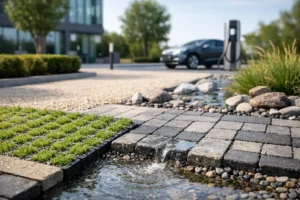
Water is another frequent culprit. Standing water at the edge of a driveway, blocked drainage or moisture rising through a concrete slab can weaken the base and create pressure during cold weather. Resin bound systems are permeable, but the ground build-up still needs to be designed to drain correctly.
Cracks can also develop where surfaces meet fixed features such as walls, manholes, steps, drainage channels or garage thresholds. These are natural points of movement. Heavy vehicle loading, especially on a driveway built with an inadequate base, may cause rutting and cracks around wheel tracks. On commercial floors, forklift traffic, impact damage and thermal movement can have a similar effect.
Poor preparation is the final major factor. Resin should be installed onto a sound, clean and appropriately prepared substrate. Laying over loose, contaminated or already damaged ground only hides the problem temporarily.
How to assess a crack before repair
Look closely at the shape, width and position of the damage. A fine, stable hairline crack in an interior coating may be suitable for local filling and recoating. A wider crack that runs across a driveway, particularly one with raised or sunken edges, points to base movement and needs more than surface treatment.
Check whether the crack is changing. Mark each end discreetly, take a photograph and inspect it after a few weeks. If it lengthens, opens, holds water or returns after a previous repair, assume there is an underlying issue. Also inspect the surrounding area for rocking, soft spots, loose aggregate, pooling water and evidence of vehicle damage.
It is worth lifting and checking nearby drainage covers where practical. A failed edge restraint or a sunken channel can allow the whole surface build-up to move. Repairing only the visible crack in that situation will not deliver a long-lasting result.
How to repair cracked resin surfaces on driveways and patios
A durable repair begins with a dry, stable working area. Avoid working in rain, frost or damp conditions, and do not apply repair resin to a cold, wet substrate. The affected section must be thoroughly cleaned of dirt, algae, loose stone and failed material before any repair begins.
Fine cracks with a sound base
Where a crack is very narrow and the surface is otherwise stable, a compatible resin crack filler may be used to seal it. The filler should match the flexibility and performance requirements of the existing system. Once cured, a light resin treatment and carefully selected aggregate can reduce the visual contrast.
This is a practical option for minor defects, but it rarely makes the line completely invisible. Decorative aggregate varies in colour, size and weathering, so even a careful local repair can remain faintly visible in certain light. On an older surface, a professional may recommend treating a larger panel rather than a narrow strip for a more consistent finish.
Wider cracks or broken resin bound areas
For a wider crack, cut out the failed material beyond the damaged line until you reach sound edges. The substrate beneath must then be inspected. Any crack in the tarmac or concrete should be repaired using a suitable flexible joint, crack repair system or local base reinstatement, depending on its condition.
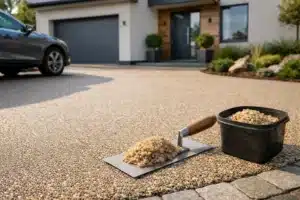
Once the base is stable, the repaired area can be primed if required and filled with a matching resin bound aggregate mix. This is not simply a case of pouring resin into the gap. The new material needs the correct aggregate-to-resin ratio, depth and trowel finish to sit properly with the surrounding surface.
Feathering a repair too thinly can lead to weak edges. Cutting a neat, defined repair area may sound more noticeable, but it gives the new resin material a stronger bond and a cleaner finish. On patterned surfaces, borders or multi-colour designs, accurate colour matching takes experience and may require extending the repair to a natural break line.
When the base has failed
If the ground beneath is soft, rocking, badly cracked or uneven, remove the affected resin and rebuild the base before resurfacing. A driveway may need a new tarmac section, improved sub-base or revised drainage. A patio may require local excavation and re-compaction. For a commercial slab, the specification may call for concrete repair, moisture testing and a new resin coating system.
This involves more work upfront, but it prevents repeat cracking. A high-quality resin finish is only as reliable as the foundation it is installed on.
Repairing cracks in commercial resin flooring
Commercial flooring repairs need to consider more than appearance. The repaired area must suit the environment, whether that means resistance to oils, cleaning chemicals, footfall, wheeled traffic or thermal shock. Downtime also matters in retail, hospitality, healthcare and manufacturing settings.
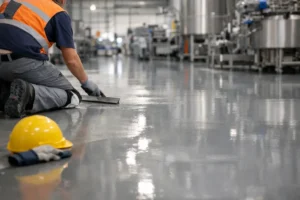
The damaged coating is normally mechanically prepared to create a clean bonding profile. Cracks in the concrete substrate are opened, cleaned and repaired with the appropriate resin mortar or flexible material. The repaired area is then recoated or blended into the wider floor using a compatible epoxy, MMA or polyaspartic system.
A quick cure can be valuable where access needs to be restored promptly, but speed should not override preparation. Moisture, contamination and inadequate surface preparation are common reasons why local floor repairs fail. A professional survey identifies the right system for the substrate and the demands of the site.
Preventing cracks from returning
Good drainage, sound edges and a stable base do more for resin longevity than any cosmetic patch. Keep channels and gullies clear, avoid allowing heavy vehicles onto areas designed only for cars or foot traffic, and deal with standing water promptly. Clean the surface regularly using suitable methods so that dirt and organic growth do not obscure early signs of damage.
When planning a new resin driveway, patio or floor, choose the specification around how the area will actually be used. A decorative courtyard, a family driveway and a busy loading area each need different preparation, thickness and resin technology. The best-looking finish is also the one designed to carry the load beneath it.
Surface King can assess cracking, drainage and base condition before recommending a repair or a wider resurfacing solution. If a crack is expanding, holding water or running across the surface, arrange a professional inspection before applying a temporary filler. A properly prepared repair gives your driveway, patio or floor the clean, durable finish it was meant to have.