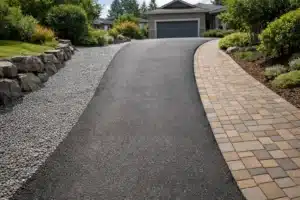
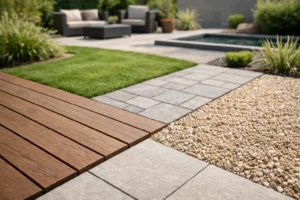
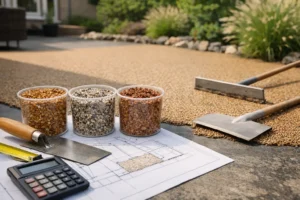
A driveway can lift a property or let it down before anyone reaches the front door. When clients ask us about resin bound vs block paving, they are usually weighing up more than looks. They want a surface that stays smart, handles the weather, and does not turn into a maintenance job six months after installation.
Both options are popular for good reason. Block paving has been a familiar choice for years, while resin bound has become the preferred upgrade for homeowners and property improvers who want a cleaner, more contemporary finish. The right answer depends on budget, existing ground conditions, the style of the property, and how much upkeep you are prepared to take on.
Resin bound vs block paving at a glance
If your priority is a sleek finish, low maintenance and excellent drainage, resin bound usually comes out ahead. If you prefer a traditional look, like the idea of individual blocks, or need a surface that can be lifted and relaid in sections, block paving may still suit the project.
That said, not all installations are equal. A well-laid resin bound surface on a solid base can deliver long-term performance and strong kerb appeal. Poorly laid block paving, on the other hand, can start moving, dipping and growing weeds far sooner than most people expect. The same is true in reverse. Good workmanship matters as much as the material itself.
Appearance and design flexibility
This is often where decisions are made.
Resin bound gives a smooth, stone-rich finish that looks sharp and modern without feeling harsh or industrial. It suits contemporary homes, renovated period properties, courtyards, garden paths and commercial entrances. You can choose from a wide range of aggregate blends, border details and layout options, so the final result feels tailored rather than off-the-shelf.
Block paving offers pattern and structure. Herringbone, stretcher bond and basketweave layouts can all look attractive, especially on more traditional homes. There is also a broad choice of block colours and sizes. The downside is that some block paving installations can look busy, dated or uneven over time, particularly if the colour fades or the joints become stained.
For clients focused on visual transformation, resin bound tends to deliver the stronger finish. It creates a more unified surface and gives outdoor spaces a cleaner, higher-value appearance.
Drainage and weather performance
In Northern Ireland, drainage is not a detail. It is central to whether a surface performs properly.
Resin bound is a permeable system when installed correctly over a suitable base. Water drains through the surface rather than sitting on top, which helps reduce puddling and supports SuDS-friendly design. That is a major advantage for driveways, patios and paths where standing water quickly becomes a nuisance.
Block paving can also allow some drainage through joints, but it is generally less reliable in practice. Over time, joints can compact, clog with dirt or encourage weed growth, all of which affect how the surface handles rainfall. If the sub-base or levels are not right, water can still collect.
For areas exposed to regular wet weather, resin bound has the edge. It is built for cleaner water management and tends to stay more consistent across the whole surface.
Maintenance and day-to-day upkeep
This is one of the biggest differences between the two.
Resin bound is popular because it is easy to live with. The surface is smooth, hard-wearing and simple to keep tidy with regular sweeping and occasional washing. Because there are no loose joints between individual units, there is less opportunity for weeds to take hold. It also resists the scattered, untidy look that can develop with older paving systems.
Block paving needs more attention. Weed growth between joints is common, even when kiln-dried sand has been used properly. Jointing sand can wash out, moss can build up in damp areas, and individual blocks may sink or loosen if the base shifts. None of that means block paving is a poor product, but it does mean the maintenance burden is usually higher.
If you want a surface that keeps its finish with minimal effort, resin bound is the stronger option.
Durability and lifespan
Durability is about more than whether a surface can take weight. It is also about how well it keeps its appearance and structure over time.
A professionally installed resin bound surface can last for many years with the right specification and aftercare. It is resistant to cracking when laid over a sound base, and because the stone is bound within the resin, the finish remains stable and attractive. It stands up well to regular foot traffic and vehicle use on domestic driveways.
Block paving is durable too, but it has more moving parts. Each block relies on the surrounding blocks, the jointing material and the integrity of the base. Once movement starts in one area, the effect can spread. Ruts from vehicles, edge movement and uneven settlement are not unusual on older installations.
One point in block paving’s favour is repairability. If a section is damaged, individual blocks can often be lifted and replaced. Resin bound repairs are possible, but seamless patching depends on the age of the surface and the aggregate blend, so the finish may not be as invisible as clients hope.
Installation and disruption
No one wants their driveway project dragging on longer than necessary.
Resin bound installation is generally efficient when the groundwork is in good order. In many cases, it can be laid onto an existing suitable base, which reduces disruption and helps speed up the process. The result is a clean, continuous finish without the labour of placing and aligning hundreds of individual units.
Block paving is more labour-intensive. Each block must be laid, aligned and compacted correctly, and the finished quality depends heavily on the care taken throughout. On larger areas, installation can take longer, particularly if there are intricate patterns or multiple edges.
For homeowners who want a faster transformation with less mess and a more polished end result, resin bound often makes more practical sense.
Cost considerations
Price matters, but headline cost rarely tells the full story.
Block paving can appear more affordable at first, especially on basic designs and standard block ranges. Resin bound may come in higher depending on the aggregate selected, the size of the area and whether the base needs upgrading. That can make block paving tempting for budget-led projects.
The better question is what the surface will cost over time. If block paving needs regular weed treatment, re-sanding, pressure washing and occasional lifting and relaying, the value equation changes. Resin bound usually requires less maintenance and keeps its appearance with less intervention, which can make it the better long-term investment.
For landlords and commercial property owners, that lower maintenance profile is often a deciding factor. A surface that stays presentable with less ongoing work is usually worth paying for.
Where block paving still makes sense
A fair comparison needs some balance.
Block paving still suits certain properties and project types. It can work well where a traditional style is important, where matching existing paving is necessary, or where localised access to underground services may be needed later. Some clients also simply prefer the look and texture of blockwork.
There are also cases where the surrounding landscape already uses brick or stone detailing, and block paving feels more in keeping. If installed to a high standard and maintained properly, it can still be an attractive and serviceable choice.
The issue is not whether block paving works. It is whether it delivers the finish, performance and ease of ownership that most modern clients are now looking for.
Why many property owners now choose resin bound
The shift towards resin bound is not just about style. It is about getting a surface that looks premium, drains properly and stays cleaner with less effort. That combination is hard for traditional paving systems to match.
For driveways, patios, pathways and courtyards, resin bound offers the kind of upgrade people notice straight away. It has a more refined finish, supports bespoke design, and helps turn tired external areas into a feature rather than an afterthought. For commercial settings, it also projects a more professional image from the moment someone arrives on site.
This is why many homeowners across Belfast and wider Northern Ireland now see resin not as a niche option, but as the smarter one. When installed by a specialist contractor with the right products, base preparation and attention to finish, it delivers the appearance and performance clients expect from a premium surface.
So which should you choose?
If you want a traditional paved look and are comfortable with more upkeep, block paving can still do the job. If you want a long-lasting, decorative, low-maintenance surface that handles wet weather well and gives your property a clear visual lift, resin bound is usually the better choice.
That is especially true if you are upgrading a driveway or patio to add value, improve first impressions and reduce ongoing maintenance. In those cases, resin bound does more than cover the ground. It changes how the whole space feels.
The best surface is the one that suits your property, your budget and the standard you want to achieve. If you are aiming higher than basic paving, resin bound is often where the real transformation starts.