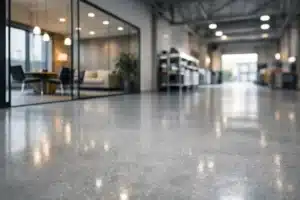
A forklift turning sharply beside a loading bay can put more stress on a floor in seconds than foot traffic will in years. So, can epoxy floors handle forklifts? Yes, a correctly specified and professionally installed epoxy floor can perform extremely well under forklift traffic. But the answer depends on the slab beneath it, the vehicles in use, wheel type, traffic pattern and the resin system selected.
For warehouses, workshops, production areas and trade counters across Northern Ireland, the aim is not simply to make a concrete floor look cleaner. It is to create a hard-wearing, easy-to-clean working surface that stands up to daily operations without becoming a maintenance problem.
Can epoxy floors handle forklifts every day?
Epoxy flooring is widely used in industrial settings because it forms a tough, bonded layer over concrete. It resists dusting, oil staining, many chemicals and routine abrasion far better than bare concrete. Where the existing base is sound and the floor has been designed for the intended use, epoxy can handle repeated forklift movement very effectively.
The key phrase is designed for the intended use. A light electric pallet lorry in a stockroom is very different from a loaded counterbalance forklift operating across a busy warehouse shift after shift. The latter creates high point loads through small wheel contact areas, particularly when carrying pallets or turning in confined spaces.
A thin decorative coating applied over weak, damp or poorly prepared concrete will not solve those problems. It may crack, delaminate or wear rapidly at turning points. A properly specified industrial resin floor, however, protects the slab while delivering a cleaner and more professional finish.
The concrete base carries the real load
Epoxy is a protective floor system, not a substitute for an inadequate concrete slab. Forklift loads are ultimately transferred into the substrate, so the slab must have sufficient strength, thickness and stability for the vehicles and stored goods involved.
If concrete is cracked, moving, contaminated with oil or breaking down at the surface, that condition needs addressing before resin is applied. In some cases, repairs and joint treatment are enough. In others, the floor may need more substantial preparation or a different solution altogether. Getting this stage right prevents the common mistake of blaming the coating for a failure that started below it.
What affects forklift performance on epoxy flooring?
Forklift compatibility is not just about the total weight of the machine. Surface King assesses the whole working environment before recommending a system. Four factors make the biggest difference:
- Vehicle weight and load capacity: A forklift at full load can exert considerably more force than its unloaded weight suggests. The heaviest likely operating condition is the one that matters.
- Wheel material: Hard nylon wheels concentrate pressure more sharply than pneumatic tyres. They can be particularly demanding in pallet lorry routes and frequent-turning areas.
- Traffic routes and manoeuvres: Straight-line travel is relatively gentle. Tight turns, braking, reversing and pivoting create abrasion and shear forces that can wear a floor faster.
- Operating conditions: Grit, metal swarf, water, oil, cleaning chemicals and temperature changes all affect long-term performance.
The busiest zones often reveal the real requirements: entrances, racking aisles, dispatch doors, loading areas and locations where drivers regularly turn at full lock. These can benefit from a higher-build system, local reinforcement or a more suitable resin technology.
Thickness and system build matter
Not all epoxy floors are the same. A light-duty epoxy paint may improve appearance and make a small storeroom easier to clean, but it is not the right choice for sustained forklift traffic. Industrial systems are generally installed at a greater thickness and may include primers, body coats, aggregate and protective topcoats.
A self-smoothing epoxy system can provide a smart, joint-free finish for moderate industrial use. For heavier traffic, a resin screed or broadcast system with aggregate can offer greater build, improved impact resistance and better traction. The correct finish should balance cleanability with slip resistance. A highly glossy surface may look impressive, but a loading area with wet footwear or spilled liquids may require a textured finish instead.
Preparation decides whether epoxy succeeds
The most durable epoxy floor starts with mechanical preparation. Concrete needs to be clean, dry enough for the chosen system and opened up to give the resin a secure mechanical bond. This is commonly achieved through diamond grinding or shot blasting, depending on the project and substrate condition.
Surface contamination is a major concern in garages, workshops and manufacturing premises. Oil, curing compounds, old paint, adhesive residues and dust can all interfere with adhesion. Simply applying epoxy over them is a short-term fix at best.
Moisture also needs proper assessment. Concrete can appear dry while still holding moisture vapour that affects adhesion or causes blistering. This is particularly relevant in older buildings, ground-floor slabs and premises with no effective damp-proof membrane. A suitable moisture-tolerant primer or damp-proof membrane may be required before the main resin system is installed.
Joints should not be ignored either. Structural and movement joints need to remain capable of moving. Coating straight over an active joint can lead to a reflective crack in the new finish. A specialist installer will identify which cracks can be repaired rigidly and which joints need a flexible detail.
When epoxy may not be the best choice
Epoxy remains an excellent option for many forklift environments, but it is not automatically the best resin for every site. If downtime is extremely limited, an MMA resin system can cure far faster than traditional epoxy, allowing areas to return to service quickly. This can be valuable in 24-hour operations, retail back-of-house spaces and busy distribution settings where closure is costly.
Polyaspartic systems can also offer fast curing and good durability, while some heavy-duty resin screeds provide superior resistance where impact, thermal shock or very aggressive use is expected. Cold rooms, food-production facilities, engineering workshops and loading areas may each call for a different specification.
Epoxy also has a curing window. It needs controlled conditions and adequate time before forklifts return to the surface. Rushing this process can damage the floor before it has reached its intended strength. Planning the installation around a shutdown, phased work area or quieter trading period is often the sensible approach.
How to make an epoxy forklift floor last longer
Once installed, a resin floor is straightforward to look after, but it is not maintenance-free. Regular sweeping matters because grit acts like sandpaper beneath tyres. Promptly remove oil, hydraulic fluid and chemical spills, even where the coating is rated for chemical resistance.
Use suitable cleaning equipment and detergents rather than overly aggressive products. Review high-wear zones periodically, especially around loading doors and turning circles. Early local repairs are usually quicker and more cost-effective than allowing damage to spread beneath the coating.
Drivers also have a role to play. Reducing unnecessary sharp turns, avoiding wheelspin and keeping loads within safe limits will protect both the floor and the operation. Where heavy racking legs, machinery or loading stands are fixed in one place, these point loads should be considered during the floor design stage.
Choose a floor system around the operation
The right question is not simply whether epoxy is strong enough. It is whether the chosen epoxy system is right for your vehicles, slab, traffic levels and operational timetable. A well-specified resin floor can transform a dusty, stained concrete area into a bright, durable workspace that is easier to clean, safer to navigate and better suited to daily commercial use.
Before committing to any coating, establish the heaviest forklift loads, tyre type, traffic routes, existing floor condition and available downtime. With those details in hand, a specialist flooring contractor can recommend a system that looks the part on day one and keeps performing long after the forklifts have gone home.