A scuffed entrance floor, stained carpet or cracked kitchen surface tells guests more about a venue than most operators would like. The top hospitality flooring options need to do more than look smart on opening day. They must cope with wet shoes, dropped drinks, moving furniture, heavy footfall, cleaning chemicals and the constant pressure to keep trading.
For hotels, bars, restaurants, cafés and leisure venues across Northern Ireland, the right choice depends on where the floor sits and how the space operates. A quiet hotel bedroom has very different priorities from a busy bar entrance or a commercial kitchen. The strongest schemes use the right finish in the right zone, balancing visual impact with safety, cleaning demands, acoustic comfort and long-term value.
What hospitality flooring must deliver
Hospitality floors work harder than most commercial surfaces. Guests expect a clean, attractive setting, while operators need a finish that can withstand daily wear without becoming a maintenance problem. That means looking beyond colour samples and considering the complete performance of the floor.
Slip resistance matters wherever rain, spills or regular mopping are likely. Durability is equally important in entrances, corridors, dining spaces and service areas, where grit and repeated traffic can quickly mark weaker materials. In food and drink settings, resistance to stains, moisture and cleaning products should be part of the specification from the start.
Downtime is another major factor. Closing a restaurant, reception area or bar for prolonged flooring works can be costly. Fast-curing systems may carry a higher initial price than basic coverings, but can make commercial sense where a venue needs to return to service quickly.
Top hospitality flooring options by area
There is no single best floor for every hospitality venue. A considered combination of materials usually gives the best result, with each surface selected for the demands of its particular area.
Decorative resin flooring for high-impact public spaces
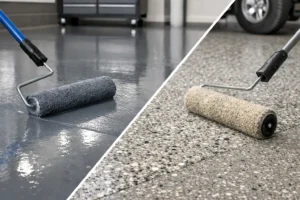
Resin flooring is a strong choice for hotel receptions, corridors, bar areas, dining spaces, washrooms, event spaces and back-of-house rooms. Poured as a continuous surface, it creates a clean, contemporary finish without grout lines or joints that can trap dirt. This makes day-to-day cleaning more straightforward and gives larger areas a calm, premium appearance.
Epoxy and polyurethane resin systems can be specified in a wide choice of colours and finishes, from subtle neutral tones to bolder branded designs. Decorative flakes, contrasting zones, borders and even logos can help carry a venue’s identity through the space. For hospitality operators investing in refurbishment, this level of design control can turn a functional floor into part of the guest experience.
The practical case is just as strong. Correctly specified resin is hard-wearing, easy to clean and resistant to many common spills. Textured aggregate or anti-slip finishes can be introduced where needed, although there is a trade-off: a more heavily textured floor improves grip but can require more detailed cleaning. This should be matched to the room, rather than applying one finish everywhere.
For projects with limited closure time, MMA and polyaspartic resin systems can offer rapid curing. They are particularly useful for commercial refurbishments where phases of work must be carefully planned around service hours. Surface King supplies and installs specialist commercial resin systems designed around these operational demands.
Safety vinyl for kitchens and wet areas
Sheet safety vinyl remains a sensible option for commercial kitchens, food preparation spaces, washrooms and staff changing areas. Its key strength is reliable slip resistance in areas exposed to water, grease and regular cleaning. When installed with properly formed coved skirtings and sealed joints, it supports a hygienic, easy-to-maintain environment.
Vinyl is generally softer underfoot than tile or resin, which can be appreciated by kitchen teams standing for long shifts. It is also available in designs that are more attractive than the traditional institutional look. However, it can be vulnerable to cuts, punctures and lifted edges if preparation or installation is poor. Heavy equipment and wheeled loads need to be considered before choosing it.
Luxury vinyl tile for bedrooms and quieter dining areas
Luxury vinyl tile, often called LVT, is popular in hotel bedrooms, lounges, corridors and low-to-medium traffic dining areas. It can reproduce timber, stone and patterned finishes while offering better stain resistance and simpler replacement than many natural materials. Individual damaged planks or tiles can often be changed without lifting the entire floor.
LVT gives designers plenty of visual freedom and can help create warmth in places where a hard, industrial finish would feel out of place. It is less suited to persistently wet areas or spaces with very heavy dragging loads, and its long-term appearance depends on a stable, well-prepared subfloor. A cheap installation can reveal every imperfection underneath it.
Porcelain tile for entrances, washrooms and feature spaces
Porcelain tile is a proven hospitality material, particularly for entrance lobbies, washrooms, café counters and feature dining spaces. It is highly resistant to moisture, easy to wipe down and available in an enormous range of stone, timber and contemporary designs. A quality porcelain floor can retain its appearance for years in the right setting.
Its limitations are practical rather than aesthetic. Grout lines require regular attention, and polished tiles can become hazardous in wet conditions unless the right slip rating is selected. Tiles are also hard underfoot and can be noisy in busy spaces. For this reason, they are often better used as part of a wider flooring plan than across every public area.
Carpet tiles for comfort and acoustic control
In bedrooms, meeting rooms, upper-floor corridors and quieter lounge areas, carpet tiles offer a level of warmth and sound absorption that hard flooring cannot match. They reduce footfall noise, improve comfort and can make a large hotel feel more welcoming. Modular tiles are also practical when isolated sections become stained or worn.
The compromise is cleaning. Carpet is not the right choice for entrances, breakfast areas where spills are frequent, or any location exposed to wet weather. Patterned, solution-dyed products can disguise day-to-day marks better than plain light colours, but a realistic maintenance plan is still essential.
Polished concrete for contemporary venues
Polished concrete suits modern restaurants, cafés, breweries and industrial-style event spaces. It delivers a distinctive, minimalist appearance and can be exceptionally durable when the existing slab is suitable. It also works well with underfloor heating and can create an impressive open-plan finish.
That said, polished concrete is not automatically low maintenance. It needs proper sealing and periodic care, and it can be acoustically hard in lively venues. Cracks within the substrate may remain visible or develop over time, which may be part of the intended aesthetic but is not right for every brand.
Choosing a floor that supports the guest journey
A hospitality floor should be planned around the way guests and staff move through the building. Entrances need grit resistance and easy cleaning. Reception areas need a polished visual statement. Dining rooms benefit from a finish that handles chair movement and drink spills without becoming overly noisy. Kitchens and washrooms need safety and hygiene ahead of decorative detail.
Think about transitions too. A sudden change from a luxurious reception floor to a tired corridor covering can undermine an otherwise high-quality fit-out. Coordinated colours, well-finished thresholds and clear zoning create a more considered experience while helping staff understand where different cleaning regimes apply.
Lighting changes how every surface looks. Dark finishes may feel dramatic but show dust, water marks and lighter debris more readily. Very pale finishes can brighten a room but may need more frequent attention in high-traffic zones. Samples should be viewed in the actual venue, under daytime and evening lighting, before the final decision is made.
Get the specification right before work begins
The best material can fail if the base is damp, uneven or poorly prepared. Before installation, assess the existing substrate, moisture levels, cracks, levels, drainage and the likelihood of movement. This is especially important for resin flooring, where a sound base and correct preparation determine the quality of the final finish.
It is also worth being clear about cleaning procedures before selecting a surface. Harsh chemicals, steam cleaning, frequent mopping and furniture movement all influence the right specification. A contractor should be able to advise on suitable finishes, slip resistance, preparation work and realistic curing times rather than simply selling the most expensive option.
For hospitality operators, flooring is a visible investment in standards. Choose a surface that suits the pace of the venue, allow for professional preparation, and the finished floor will continue to welcome guests long after the refurbishment photographs have been taken.