A patio can look smart on day one and still feel wrong every time you use it. The colour may fight with the brickwork, the surface may be too bright in full sun, or it may turn slippery the minute the Belfast rain arrives. That is why knowing how to choose resin patio finish matters before any stone blend, border or resin system is ordered.
The right finish does more than improve appearance. It changes how the space feels underfoot, how easily it cleans, how well it copes with weather, and how long it keeps its fresh, high-end look. A strong resin patio should be attractive, durable and practical in equal measure. If one of those three is missing, the result will never feel complete.
How to choose resin patio finish for your space
The best starting point is not the sample board. It is the patio itself. Size, light, drainage, traffic levels and the style of the property should all shape the finish you choose.
A compact courtyard usually benefits from lighter aggregate blends that open the area up and make it feel cleaner and brighter. A large patio can carry deeper tones and more contrast without looking heavy. If the area gets strong daylight for most of the day, very pale finishes can sometimes create too much glare. In a shaded garden, those same tones may lift the whole space.
This is where specialist advice makes a real difference. Resin finishes are not one-size-fits-all. The same blend that looks excellent outside a contemporary extension may feel out of place against older brickwork or a traditional garden wall. The patio needs to relate to the house, not compete with it.
Start with the property style
If your home has a modern finish, clean aggregate blends in silver, grey, white or charcoal tones often work well. They give the patio a sharper, more architectural look. For traditional homes, warmer mixes with golden, beige or natural stone tones usually sit more comfortably and create a softer finish.
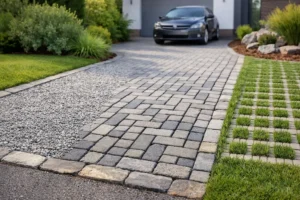
Borders matter too. A resin patio can be kept minimal with a single consistent finish, or framed with a darker edge to define the area and tie into existing features such as door frames, fencing or paving details. The right border can make the whole installation look more bespoke without becoming overly busy.
Think about how the patio is actually used
A decorative seating area has different demands from a family patio used every day. If the surface will see frequent footfall, outdoor dining, children playing, pets, pots being dragged about and regular cleaning, durability needs to sit high on the list.
This is where choosing purely on appearance can backfire. Some clients are drawn to the smoothest or lightest-looking finish, only to realise later that they need stronger slip resistance or a blend that hides general use better. A finish should still look good after a wet winter and a busy summer, not just on installation day.
Resin bound or resin bonded – which finish fits best?
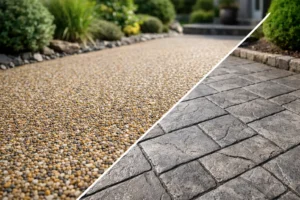
For most domestic patios, resin bound is the preferred option. The stone and resin are mixed together before being laid, creating a smooth, attractive surface with a consistent finish. It is popular because it looks premium, feels comfortable underfoot and delivers the decorative appearance most homeowners want.
Resin bonded is different. Resin is applied to the base, then aggregate is scattered onto it. This creates a rougher texture and a more traditional high-grip surface. It can suit certain applications, but for patios it is generally chosen less often when visual impact and comfort are priorities.
That does not mean one is universally better. It depends on the job. If appearance, easy maintenance and a refined finish lead the brief, resin bound is often the stronger fit. If a more textured anti-slip surface is needed for a very specific setting, bonded systems may come into the conversation. The key is to match the system to the use, not to force the use around the system.
Do not overlook slip resistance
Patios in Northern Ireland need to perform in wet conditions. That is not a minor detail. It is one of the first things any sensible property owner should consider.
A resin finish should provide reliable grip while still being comfortable and easy to maintain. Texture plays a part here, but so do aggregate size, installation quality and the overall design of the surface. If the patio sits near steps, a hot tub, a garden room or doors that see regular traffic, grip becomes even more important.
A professional installer will balance safety and finish rather than pushing one at the expense of the other. A patio should feel secure in use without looking coarse or overly industrial.
Choosing colour, texture and aggregate blend
This is the part most people enjoy, and rightly so. The finish is where the transformation really becomes visible. But the best choices are usually the most considered, not the boldest.
Colour should connect with the wider property. Look at brick, render, window frames, roof tones and any existing paving that will remain. A patio that works with these elements will look more expensive and more settled from the start.
Warm blends tend to create a welcoming, classic appearance. Greys and mixed contemporary tones feel cleaner and more design-led. Brighter finishes can make smaller areas look bigger, but they may also show marks more readily. Darker finishes can look striking and premium, though they may absorb more heat in sunny spots and can make confined spaces feel tighter.
Texture is equally important. A resin patio should not feel harsh, but it should not be polished-looking to the point where practicality is compromised. A well-selected aggregate blend gives the surface visual depth without becoming fussy. That is often the sweet spot – enough variation to hide day-to-day dust and marks, but not so much contrast that the patio dominates the garden.
Samples are useful, but context matters more
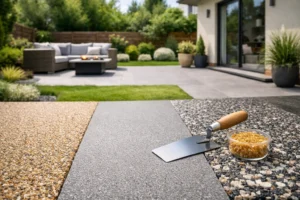
Many clients choose from a small sample and assume the full patio will look exactly the same. In reality, scale changes everything. A blend that looks subtle on a hand-sized board can appear much busier when laid across a large entertaining area.
It also looks different outside. Natural light, surrounding materials and even planting can alter how a colour reads. That is why finish selection should always be made in context. Good guidance helps you avoid costly choices that looked right indoors but feel wrong once installed.
Base, drainage and installation quality shape the finish too
Even the best resin blend will disappoint if the foundation is poor. When people ask how to choose resin patio finish, they often focus on the top layer alone. The truth is the final result depends just as much on what sits beneath it.
The patio base must be suitable, stable and properly prepared. Drainage needs to be considered from the start, especially on older patios being upgraded. If there are weak spots, movement or water issues in the sub-base, the finish above will not perform as it should.
This is one reason specialist contractors consistently deliver better results than general trades trying resin as an add-on service. Resin surfacing is not just a decorative topping. It is a system. Base preparation, edge detailing, mixing, laying conditions and curing all affect the appearance and lifespan of the finished patio.
Maintenance should be part of the decision
A good resin patio is low maintenance, but low maintenance is not no maintenance. If you want a surface that keeps its visual appeal with minimal effort, choose a finish that suits the way you live.
Very pale finishes may need a little more attention in high-use areas. Patios beneath trees may need more regular sweeping to prevent organic build-up. A textured or varied blend can be more forgiving where everyday garden use is concerned. These are practical details, but they directly affect long-term satisfaction.
The strongest finish choice is usually the one that balances appearance with realistic upkeep. That is how you get a patio that still looks the part years later.
When bespoke design is worth it
If the patio is a major feature of the garden, a custom finish is often worth considering. Contrasting borders, shaped sections, coordinated pathways and colour choices matched to the property can elevate the whole exterior.
Done well, bespoke design does not need to be flashy. Often, the most effective custom work is subtle – a darker edge to sharpen the layout, a blend repeated from the front path to create continuity, or a finish chosen to connect house and garden room as one visual space.
For homeowners and property improvers who want a result that feels properly finished rather than simply replaced, this is where specialist resin expertise earns its place. Surface King works with clients across Belfast and Northern Ireland to create patios that are not only long-lasting and easy to maintain, but designed to enhance the property as a whole.
The smartest choice is rarely the trendiest sample or the cheapest quote. It is the finish that suits your property, stands up to the weather, feels safe underfoot and still looks right every time you step outside. If you choose with that in mind, your patio will do what it should from the first day – improve the space and keep improving it.